
FIRE DETECTION IS TOO LATE
A transit fire detection system designed to identify risk before failure.
Integrated safety systems and fleet technologies for the people, vehicles, and facilities that keep communities moving.
THAT BUS DOESN’T HAVE TO BURN™
Trident gives transit agencies earlier visibility into developing thermal events—providing more time to protect people, vehicles, facilities, and surrounding assets.
Trident™ combines continuous thermal monitoring, precise detection, escalating alerts, vehicle data, and coordinated bus fire suppression within one connected platform.
Instead of waiting for smoke, flame, or a conventional threshold alarm, Trident helps agencies identify abnormal conditions closer to their source and respond before the situation becomes more difficult to control.
Continuous thermal and optical monitoring
Location-specific detection of developing conditions
Escalating alerts through cloud-based dashboards
Integration with vehicle data and operational systems
Coordinated suppression and configurable response protocols
Historical information for investigation and root-cause analysis
From reactive detection toward predictive fire intelligence
Traditional fire detection systems are designed to recognize an event once defined alarm conditions are reached. Trident takes a more proactive approach.
Trident continuously monitors thermal trends and system inputs for abnormal conditions that may indicate developing risk—giving transit agencies earlier visibility and more time to respond before conditions escalate.
Trident doesn't predict when a fire will occur. It provides the intelligence needed to recognize potential problems sooner.
THE TRIDENT SYSTEM

Identify abnormal conditions earlier
Trident continuously evaluates thermal data against established operating parameters, identifying abnormal conditions in milliseconds rather than waiting for traditional alarm thresholds to be reached.

Notify the right people with the right information
Alerts increase in severity as conditions change, giving drivers, dispatchers, maintenance personnel, and safety teams timely, location-specific information through vehicle displays, cloud dashboards, email, SMS, or integrated fleet systems. This keeps every stakeholder in sync as a situation develops, from the driver in the seat to the safety team back at the depot.

Nullify the threat—or limit its impact
Trident can initiate configured countermeasures, including bus fire suppression, vehicle protocols, or asset-protection procedures based on the location and severity of the condition. When recovery isn't possible, earlier information still helps agencies isolate the vehicle and protect nearby buses, infrastructure, and personnel.
THE THERMAL PROBLEM
Legacy systems respond to an alarm. Trident helps agencies see the event developing.
Many conventional transit fire systems are designed to activate when a sensor reaches a predetermined threshold or evidence of combustion is already present.
That approach can leave agencies with little time to investigate, isolate the vehicle, protect adjacent assets, or initiate an orderly response.
Trident adds continuous thermal visibility and operational context, helping agencies:
Identify abnormal heat earlier
Locate the source of a developing condition
Distinguish isolated readings from sustained trends
Notify the appropriate personnel as severity changes
Initiate suppression or other configured protocols when required
Preserve the event history for investigation and analysis
Where batteries fail.

Batteries run safely within a normal temperature range, but too much heat — from the environment or from the battery itself — can push them toward failure. As temperatures climb, warning signs appear, but by the time an alarm sounds, the battery may already be past the point of no return. Minutes later, it can vent gas and ignite.
The takeaway: waiting for an alarm means reacting to a failure already in motion. waiting for an alarm means reacting to a failure already in motion. Identifying abnormal heat earlier creates more time to investigate, intervene, and protect surrounding assets.
TRIDENT DASHBOARDS
Identify. Notify. Nullify.
See what matters without searching for it
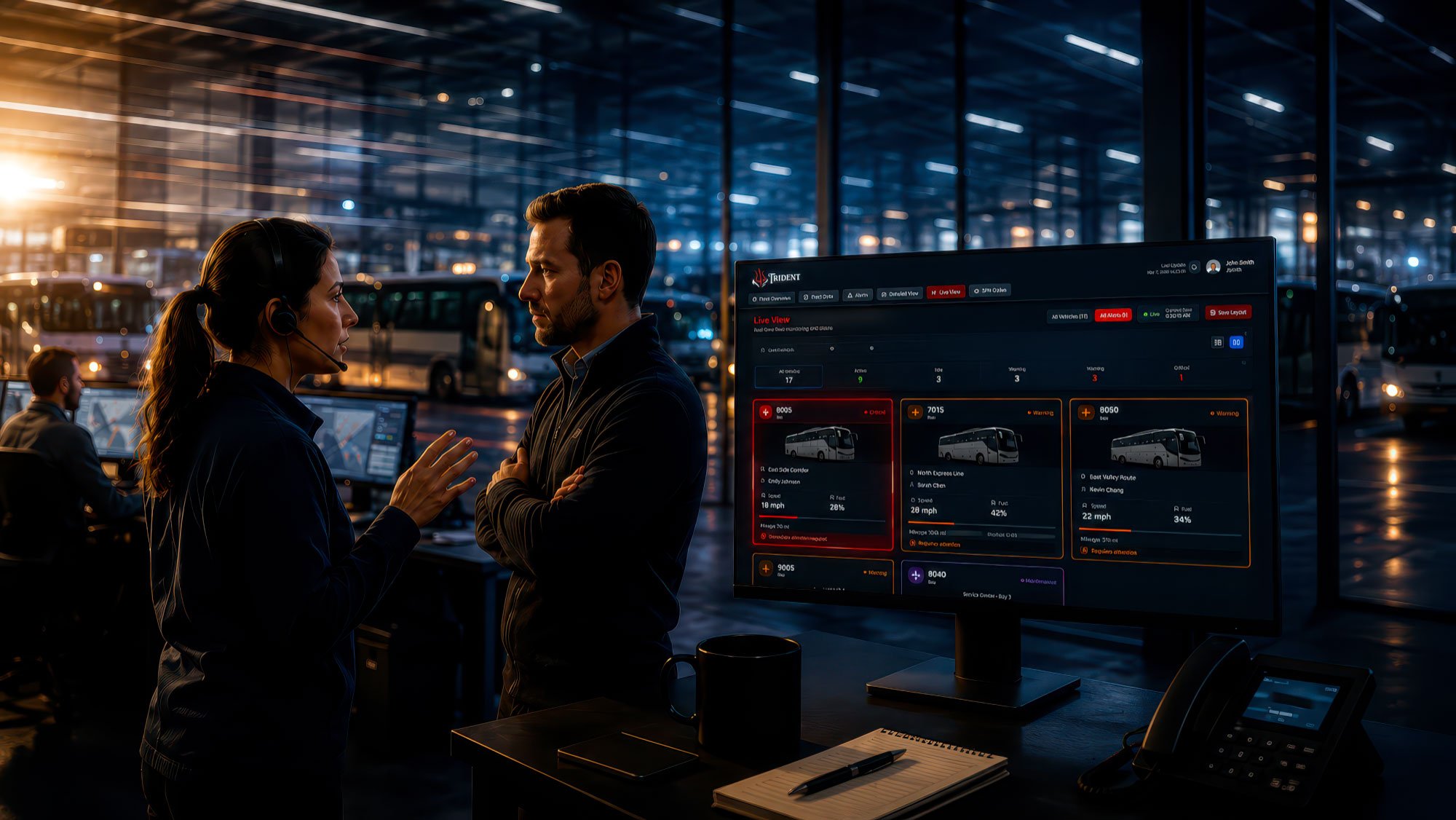
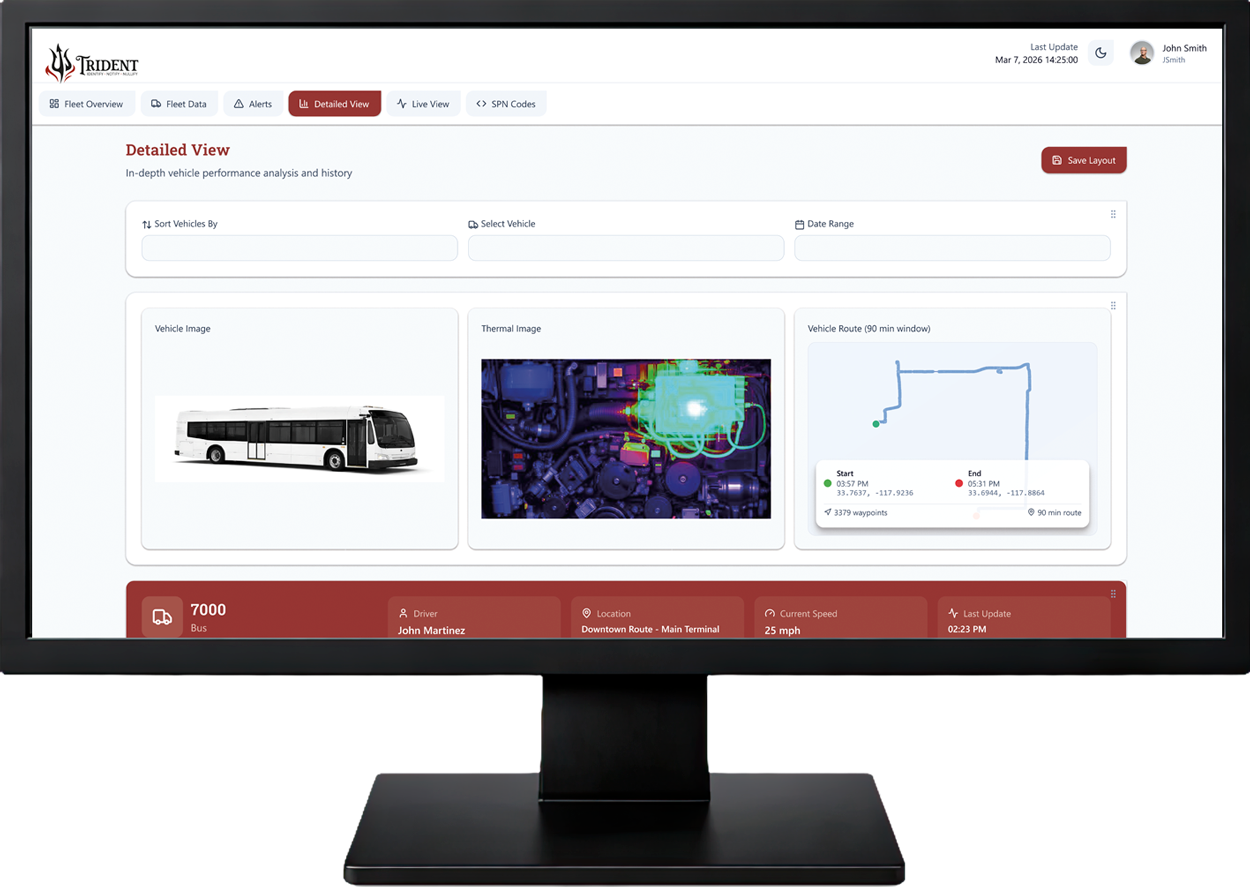
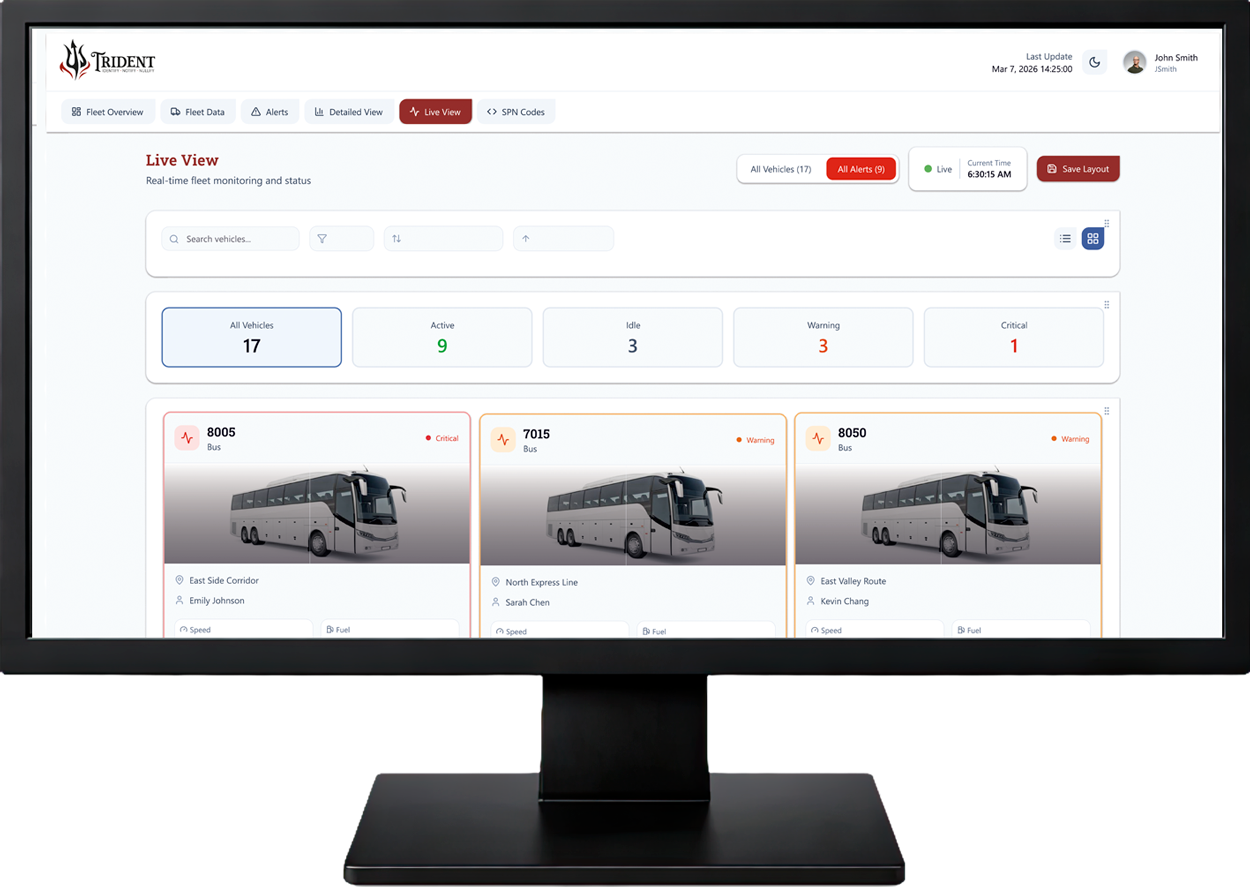
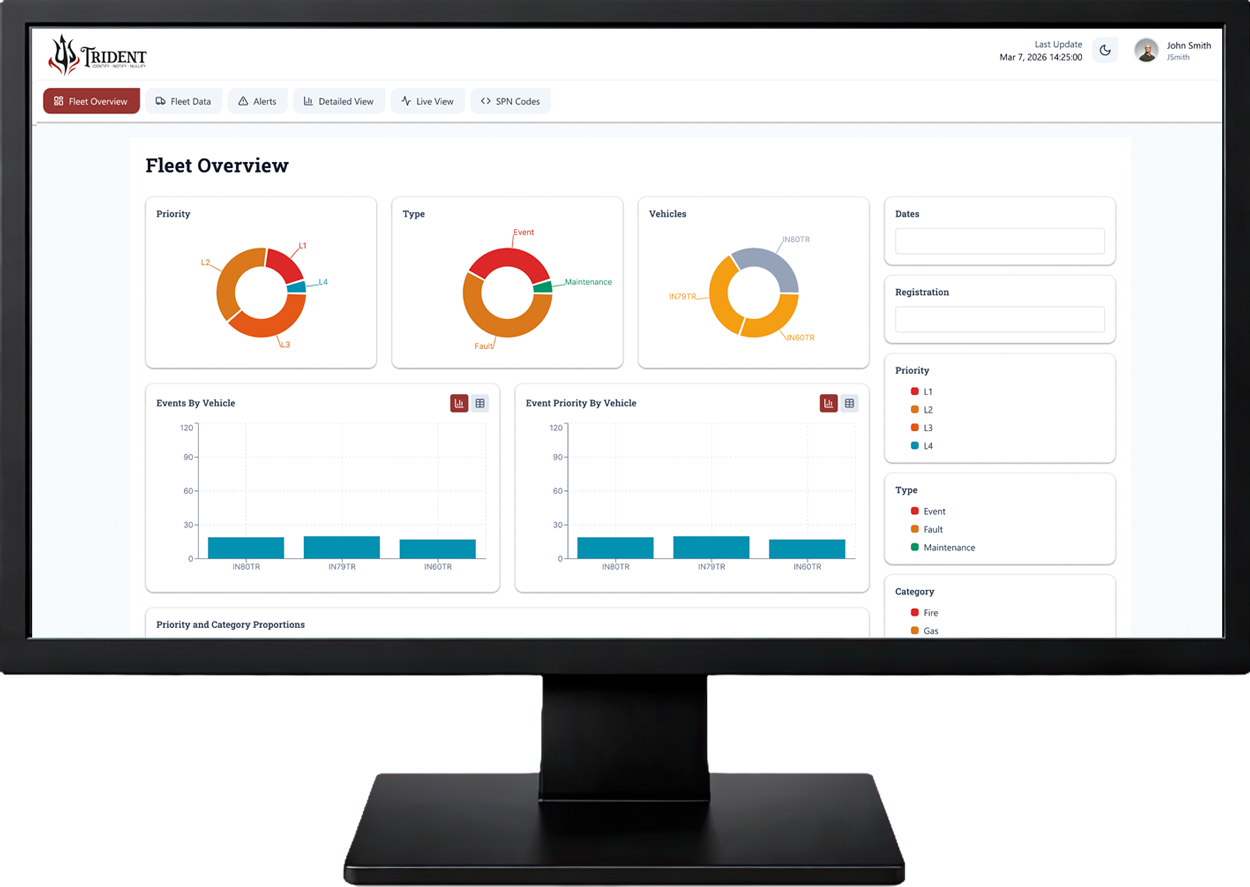
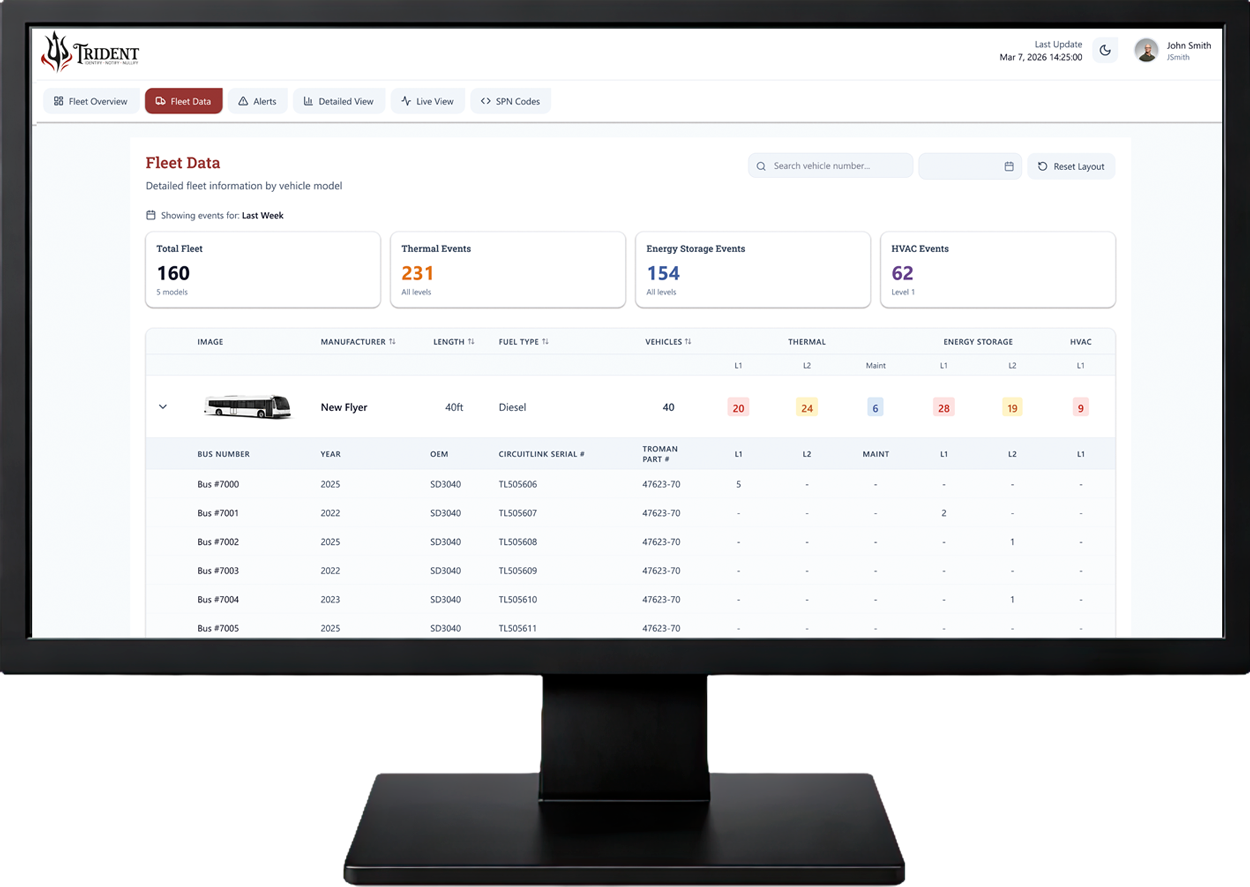
Trident gives transit agencies a fleet-wide view of vehicle condition, active alerts, thermal trends, diagnostic information, and historical activity. Designed for desktop and mobile access, the dashboard helps safety, maintenance, operations, and management teams move from isolated alarms to a clearer operational picture.
Fleet health at a glance
Review vehicle status, current conditions, recent activity, and fleet-level performance from one central view.
Thermal trends over time
Compare current readings with historical activity to identify patterns, recurring conditions, and changes that warrant investigation.
Prioritized alerts
See active and escalating alerts in order of severity so the most urgent conditions receive attention first.
Vehicle-level detail
Examine the thermal profile, system condition, alert history, and available operational information for an individual vehicle.
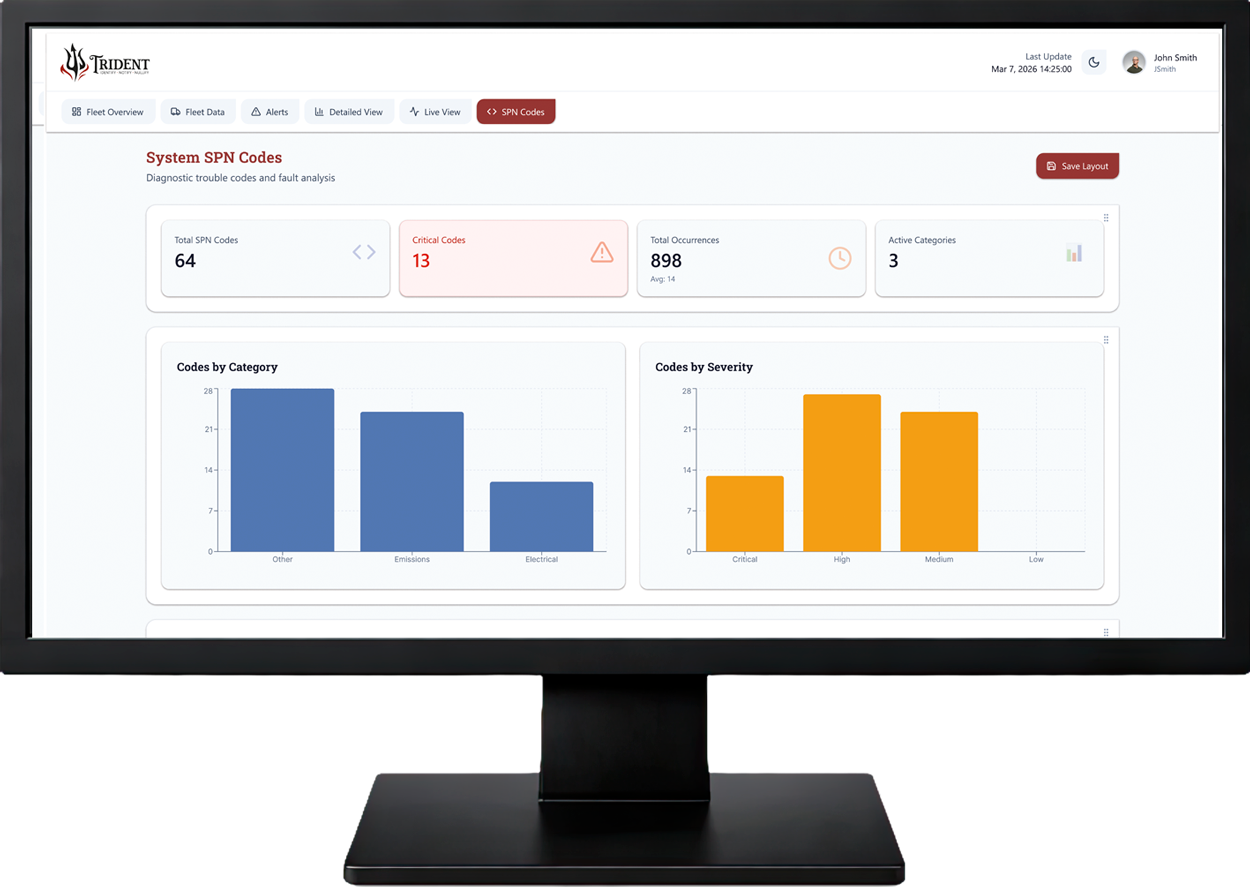
Diagnostic context
Translate vehicle fault codes and recorded activity into information maintenance and safety teams can use.
TRIDENT BENEFITS

More time. Better information. Greater control.
Millisecond Detection
Trident evaluates incoming thermal data in milliseconds, identifying abnormal conditions as they develop rather than waiting for traditional alarm thresholds to be reached.
Earlier visibility
Identify developing thermal conditions before they become obvious through smoke, flame, or equipment failure.
More coordinated response
Give drivers, dispatchers, maintenance teams, and safety personnel access to clearer and more timely information.
Better protection for surrounding assets
Help agencies isolate a developing event and reduce exposure to nearby vehicles, charging equipment, buildings, and maintenance facilities.
Stronger incident reconstruction
Preserve thermal, alert, diagnostic, and operational information for root-cause analysis, insurance review, training, and legal investigation.
Improved fleet planning
Use recorded trends and event history to inform maintenance priorities, vehicle specifications, operational procedures, and future procurements.
Electric bus fire safety requires earlier visibility.
Battery-electric buses introduce high-voltage components, battery enclosures, charging systems, and thermal conditions that may behave differently from conventional vehicle systems. When a developing event is not identified early, agencies may have limited options beyond isolating the vehicle, evacuating the area, and protecting surrounding assets.
Trident is designed to give agencies more time and information by:
Monitoring thermal conditions continuously
Identifying unusual temperature patterns
Locating developing conditions more precisely
Delivering alerts before major escalation
Supporting coordinated intervention and suppression
Preserving data for investigation and future prevention
APPLIED THERMAL SCIENCES
Help shape the next generation of electric bus fire safety.
Troman is working with forward-thinking transit agencies to test and evaluate Trident technologies under controlled and real-world conditions.
Participating organizations may contribute to:
Controlled evaluation of vehicles, battery enclosures, and components
Testing of thermal, gas, optical, and linear heat detection
Development of industry thermal baselines
Evaluation of alerts, dashboards, and fleet integrations
Validation of suppression and countermeasure strategies
Advancement of electric bus fire safety research

Frequently asked questions about the Trident™
-
Trident is an integrated transit fire detection and mitigation platform developed by Troman Industries. It combines continuous thermal monitoring, detection technologies, escalating alerts, fleet data, and coordinated response capabilities to help transit agencies identify and manage developing thermal events.
-
Traditional bus fire suppression is generally focused on releasing an extinguishing agent after a defined activation condition occurs. Trident adds earlier thermal visibility, staged notifications, vehicle information, dashboards, and configurable response protocols around that suppression capability.
-
Yes. Trident can monitor battery enclosures, high-voltage components, charging areas, and other locations associated with battery-electric bus operations. The system is designed to identify abnormal heat patterns and provide agencies with more time to investigate and respond.
-
Depending on the vehicle and system configuration, Trident may use thermal imaging, linear heat detection, confirmed-temperature sensing, optical detection, gas sensing, vehicle diagnostics, and other inputs to monitor high-risk areas.
-
Trident does not predict whether or when a battery fire will occur. Instead, it continuously monitors thermal conditions and other system inputs for trends and abnormalities that may indicate developing risk. This can give transit agencies earlier visibility and more time to investigate, respond, and mitigate potential hazards.
-
Alerts can be delivered through available vehicle displays, cloud dashboards, mobile devices, email, SMS, and integrated fleet systems. Notifications can increase in severity as the condition changes.
-
Compatibility depends on the vehicle, suppression equipment, control architecture, and selected Trident configuration. Troman evaluates the existing system and determines which detection, monitoring, notification, data, and suppression components can be retained or integrated.