
Learning From Electric Bus Thermal Near-Misses
The most valuable BEB fire incident may be the one that never becomes a fire.
That sounds backward until you think like a maintenance team. A thermal warning, charger anomaly, repeated compartment heat spike, unexplained fault, or unusual post-route condition can all be useful if the agency captures it, reviews it, and changes something.
The NFPA Fire Protection Research Foundation's work on lithium-ion battery transit bus fire prevention and risk management points to a still-developing need for better practices. Agencies do not have to wait for a burned vehicle to start learning.
A near-miss is not nothing. Sometimes it is the system giving you a cheaper lesson.
Fire Risks for Parked and Charging Electric Buses
A parked battery-electric bus can look wonderfully boring. That is part of the problem.
It may be charging. It may be cooling. It may be balancing battery systems. It may be sitting inside a depot with stored energy and no driver nearby. It may be three feet from the next vehicle your agency needs for morning pullout.
BEB fire planning has to account for the full duty cycle, not just revenue service. The FTA's BEB deployment guidance connects bus deployment with maintenance, charging infrastructure, training, and operations planning. Fire safety belongs in that same full-cycle discussion.
A parked bus is not inactive from a risk perspective. It is just less supervised.
Electric Bus Fire Protection: Questions for Procurement
Procurement teams are trained to ask what a system costs. For BEB fire protection, the better first question may be what decisions the system helps the agency make before the incident gets worse.
That question changes the entire evaluation. It moves the conversation beyond features and into operating value: detection zones, alert pathways, facility integration, suppression logic, maintenance workflows, incident documentation, and responder coordination.
The NFPA Fire Protection Research Foundation's work on lithium-ion battery transit bus fire prevention and risk management is a reminder that this category is still developing. Agencies are not simply buying yesterday's fire system for tomorrow's fleet.
They are defining what “good” should look like.
Battery-Electric Bus Fires: 10 CommonMisconceptions
Battery-electric bus fires are easy to sensationalize. They are also easy to minimize. Neither habit helps transit agencies.
The useful conversation lives in the middle. BEB fires are not a reason to retreat from electrification, but they are different enough from conventional vehicle fires that agencies should not treat them as business as usual. Lithium-ion battery incidents can involve thermal runaway, reignition, stranded energy, and responder safety concerns. The NTSB and U.S. Fire Administration have both documented these challenges in different ways.
That means leadership needs a cleaner conversation: less hype, less hand-waving, and more practical understanding of what actually changes when battery-electric buses enter the fleet.
This article takes on ten common misconceptions before they become planning assumptions.
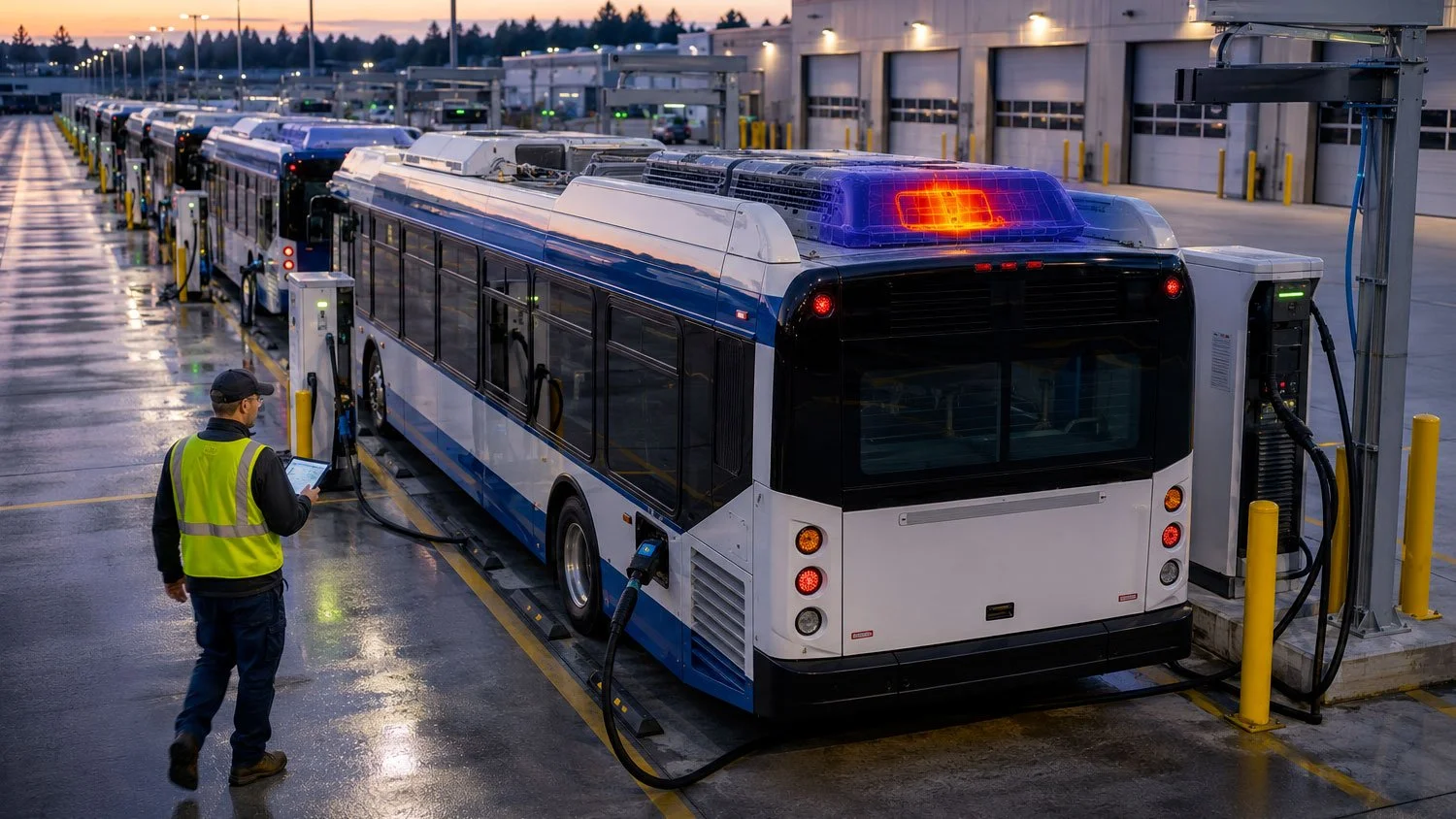
Thermal Monitoring Data for Electric Bus Fleets
Most agencies do not lose control of a thermal event all at once. They lose control in the gap between when something changes and when the right people understand what changed.
That gap is easy to underestimate because it does not look like a fire. It looks like incomplete information, unclear alert ownership, missing maintenance history, or a warning that never reaches the facility team. In a BEB fleet, that information gap can affect vehicle loss, charging equipment, adjacent buses, service continuity, responder coordination, and insurance documentation.
The NFPA Fire Protection Research Foundation has identified lithium-ion battery transit bus fire prevention and risk management as a research need for the industry. That is a polite way of saying the playbook is still being built.
The next question for transit agencies is not simply whether they have fire data. It is whether they have useful visibility.
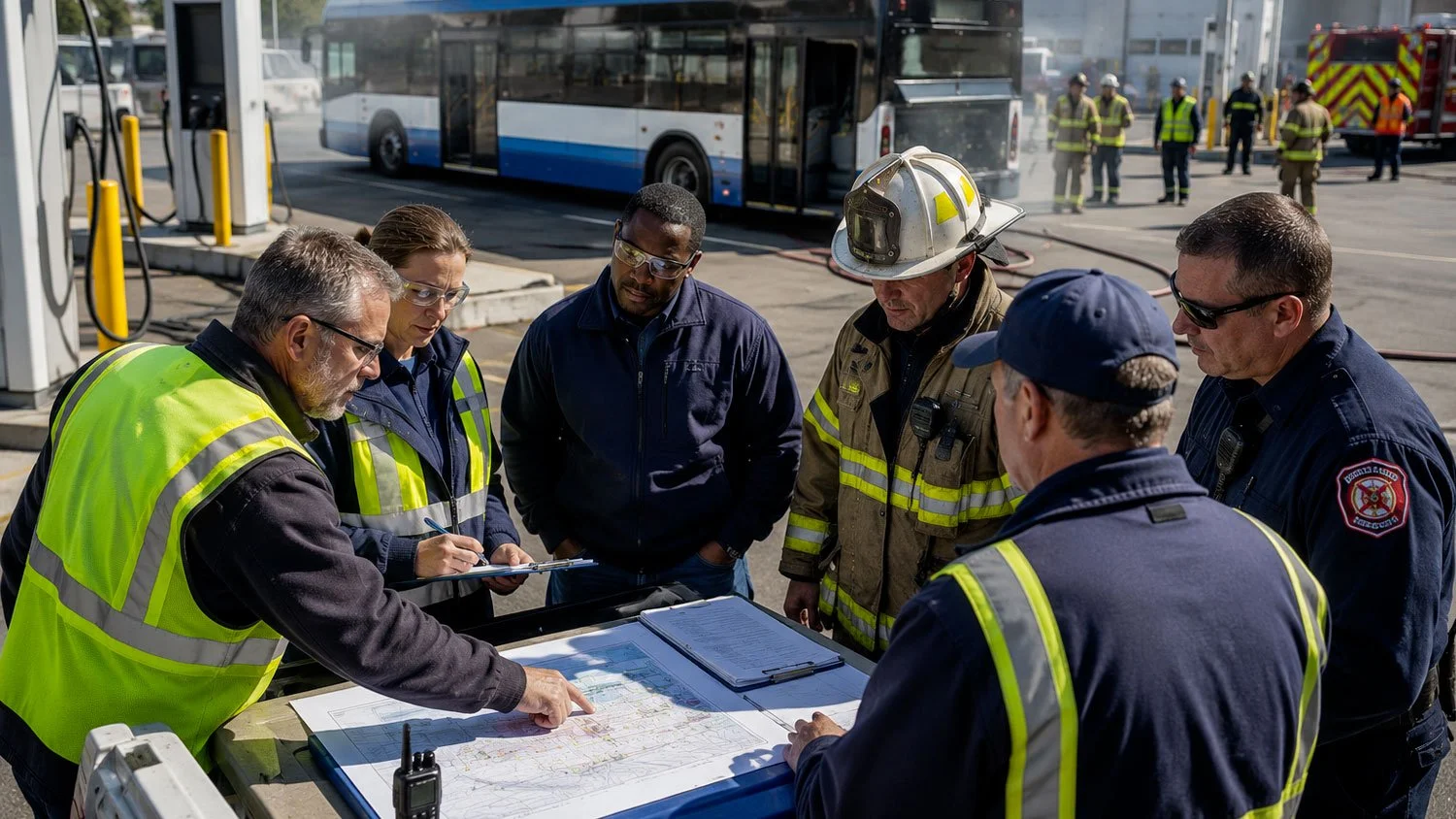
Electric Bus Charging Depot Fire Safety
In a diesel fleet, fueling is usually a task. In a battery-electric bus fleet, charging is an operating environment.
That difference matters more than it sounds. BEB charging involves vehicle scheduling, charger availability, utility infrastructure, maintenance procedures, depot layout, software visibility, overnight staffing, and facility safety. APTA's BEB charging infrastructure KPI guidance focuses on performance indicators agencies can use to evaluate charging infrastructure, which is a reminder that charging is now a managed operating system, not just a plug-and-walk-away task.
The fire-risk side of that conversation needs the same practical attention. When buses are parked close together, connected to high-power equipment, and left to charge for hours, the agency needs more than a morning report that says the bus did or did not charge.
It needs to know what happened overnight.
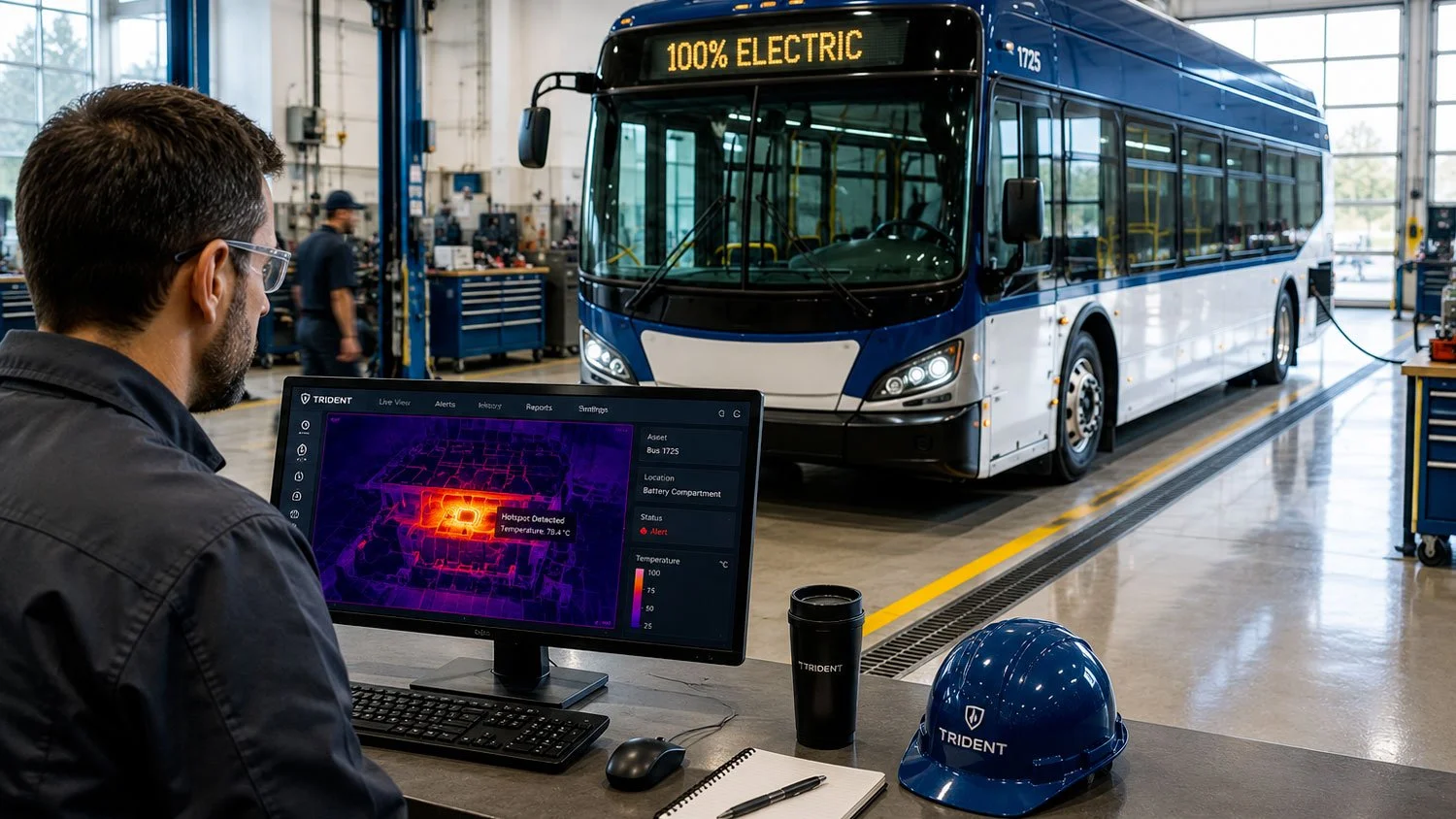
Electric Bus Fire Response: The First 10 Minutes
In a battery-electric bus thermal event, the first 10 minutes are not only about fire. They are about whether the organization knows what to do.
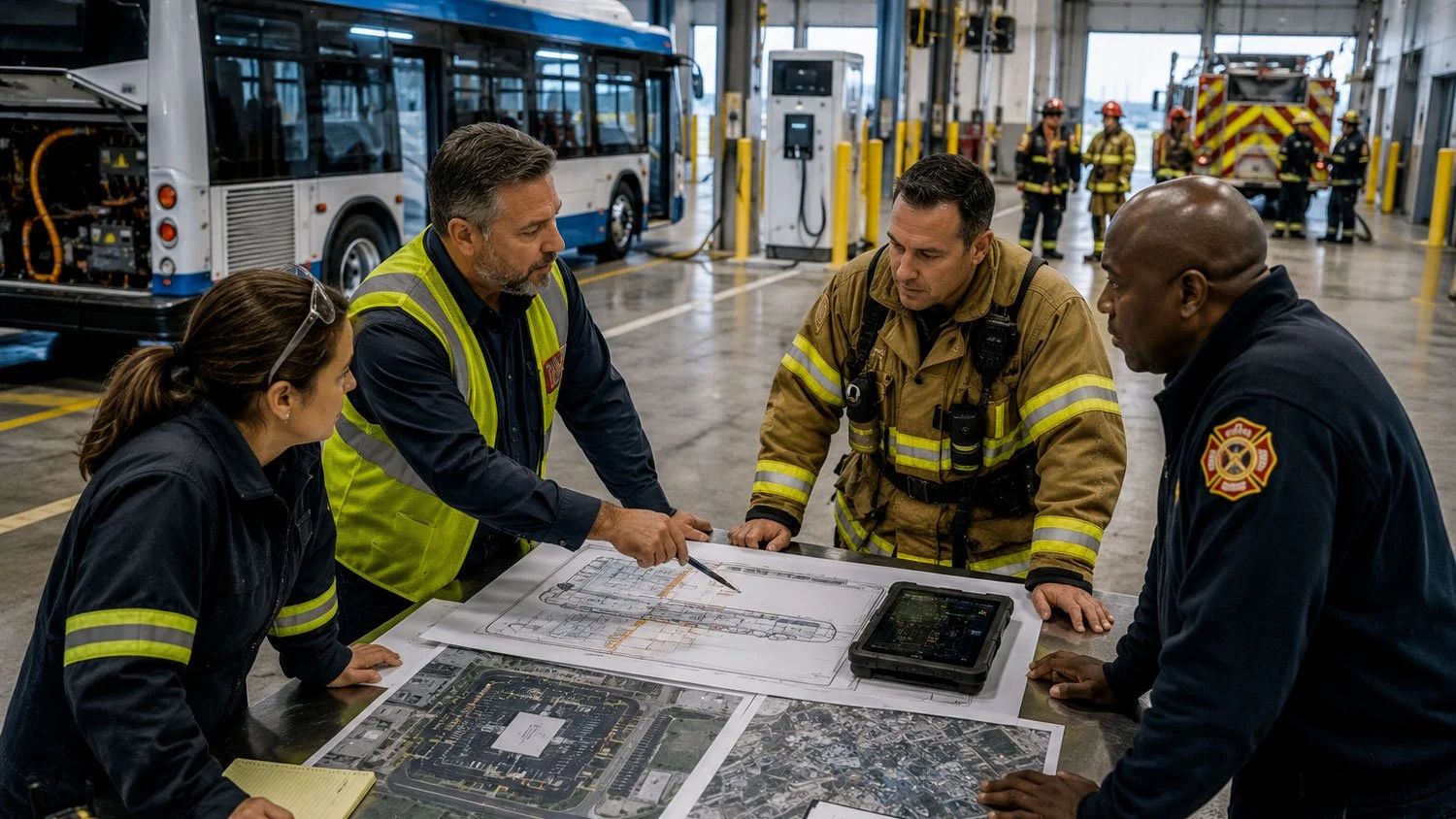
Who receives the first alert? Does dispatch know whether the bus is occupied, parked, charging, or inside a facility? Does maintenance know where the abnormal condition is located? Does the facility team know whether nearby buses or charging equipment need to be isolated? Do first responders receive useful BEB-specific information before they arrive?
The U.S. Fire Administration notes that electric vehicle and lithium-ion battery incidents can involve electric shock, thermal runaway, battery ignition and reignition, and stranded energy. That is exactly why emergency response guides matter: responders need rapid access to critical information, not a scavenger hunt during an incident.
The first 10 minutes do not create the plan. They reveal whether one exists.
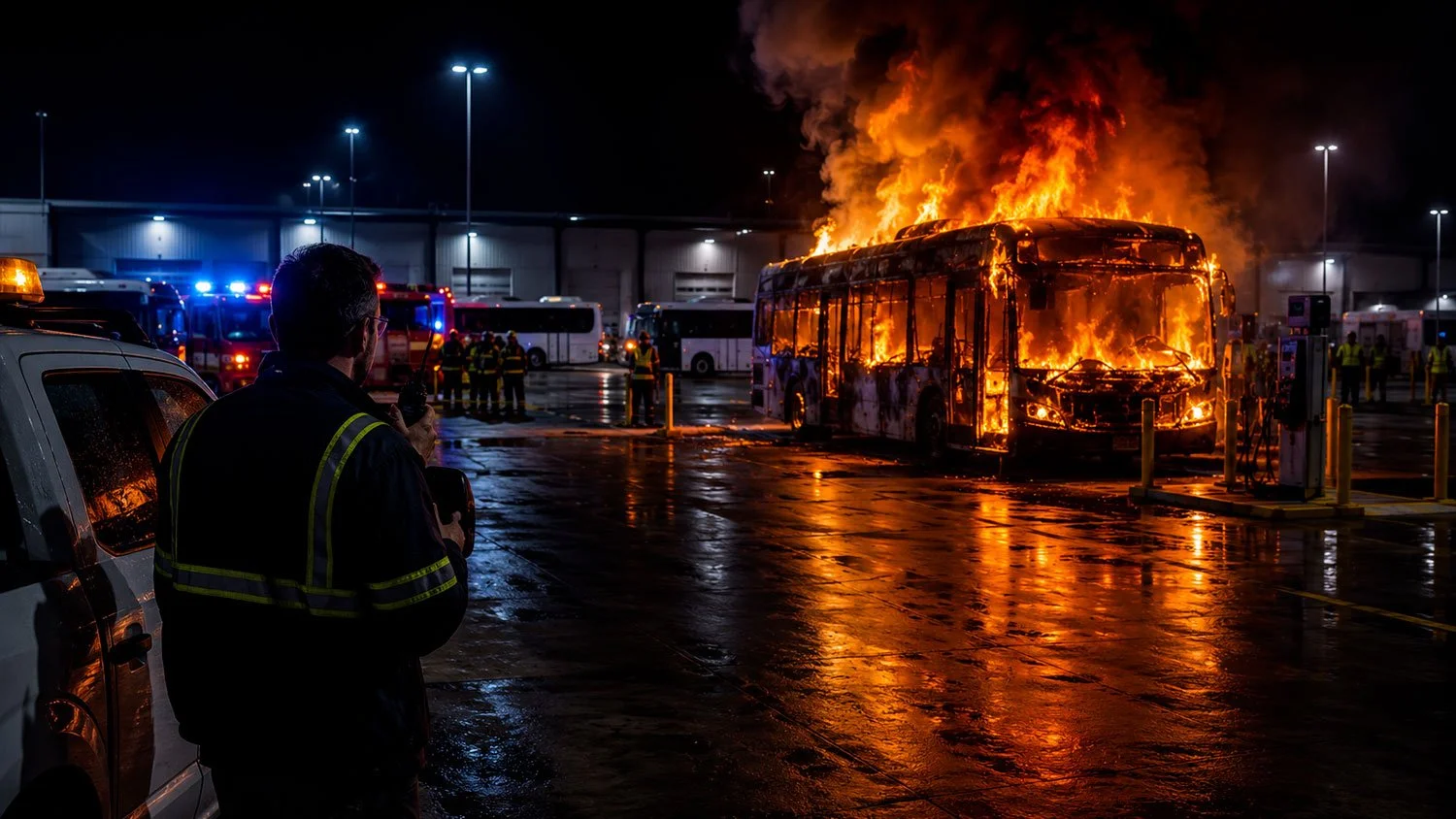
Electric Bus Fire Response Planning for Transit Agencies
“Let it burn” may be a fireground decision. It should not be a planning philosophy.
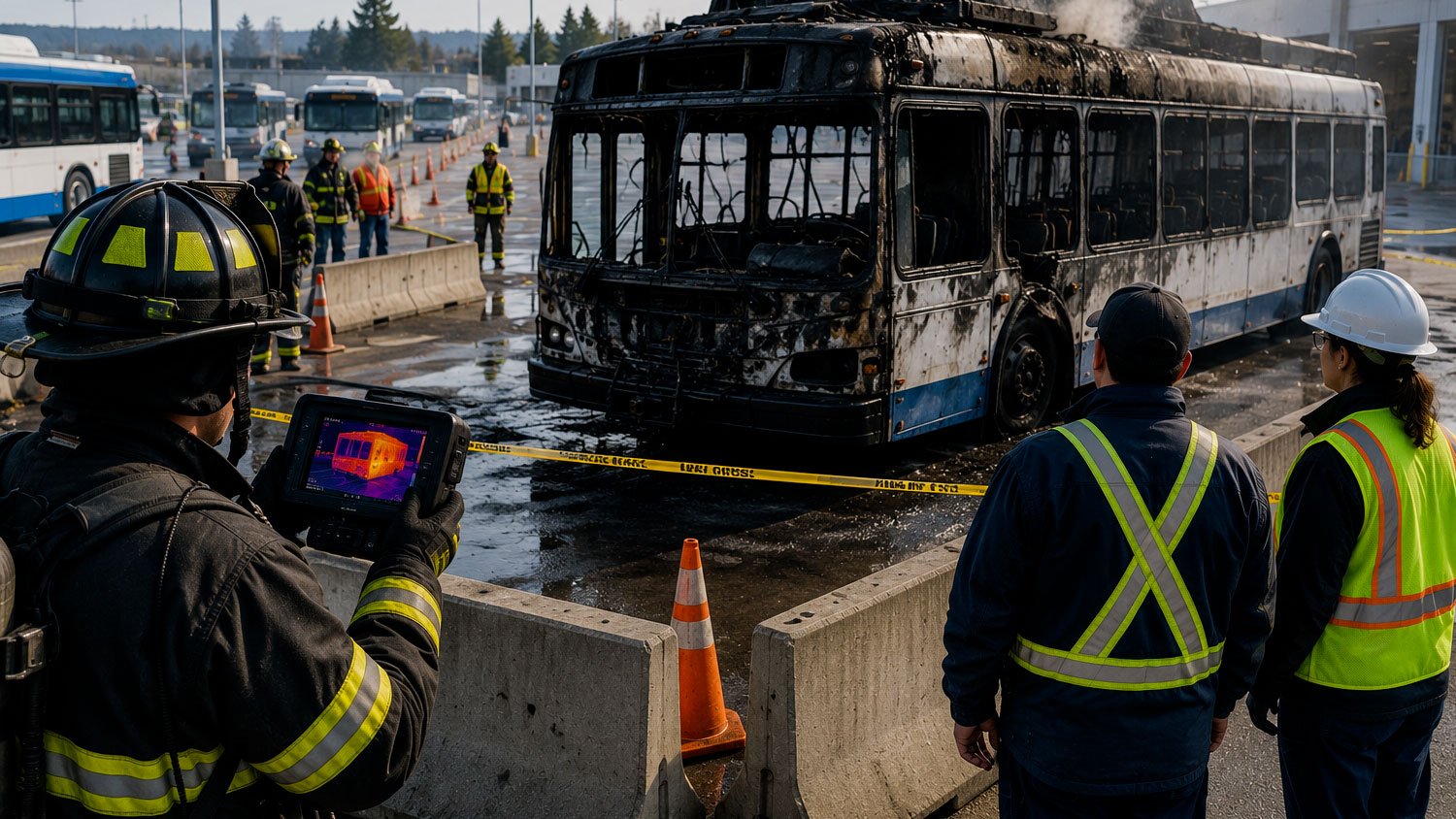
That distinction matters for battery-electric bus fleets. Lithium-ion battery incidents can involve reignition risk, thermal runaway, stranded energy, and high-voltage hazards. The U.S. Fire Administration notes that lithium-ion battery fires can reignite after extinguishment and may require post-fire monitoring and safety zones. The NTSB has also identified responder risks related to high-voltage lithium-ion battery fires, including electric shock, thermal runaway, and reignition hazards.
So yes, there may be moments when a defensive response is the safest available choice.
But if “let it burn” is the first clear answer in the plan, the plan is already late.
The better question for transit agencies is what they specified, trained, detected, isolated, communicated, and documented before the incident reached that point.
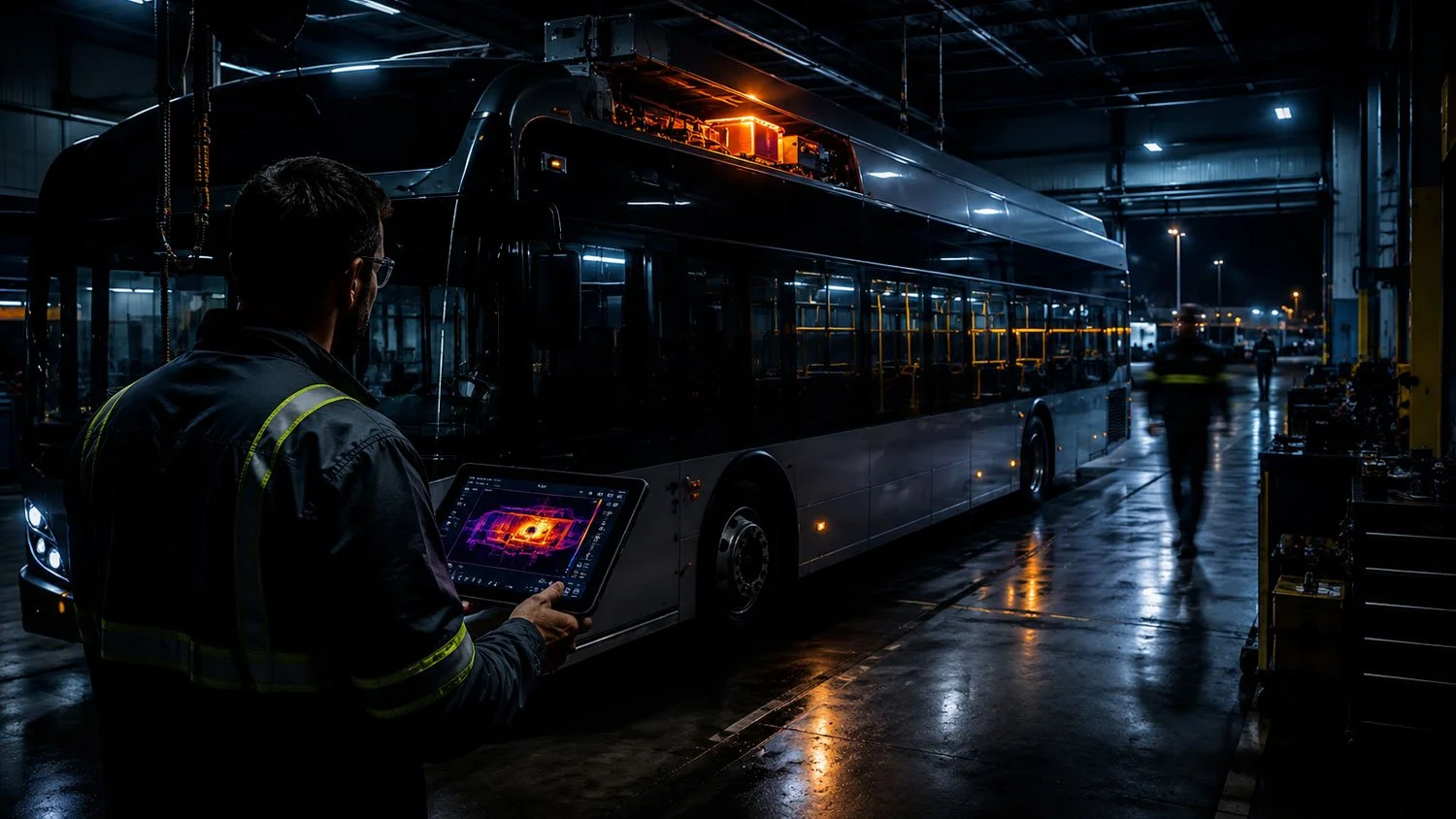
Early Warning Signs of Electric Bus Battery Fires
A bus comes back from service, gets parked, and plugs in for the night. Nothing looks wrong. No smoke. No flame. No drama. Just another bus in another depot doing exactly what it is supposed to do.
That is the hard part.
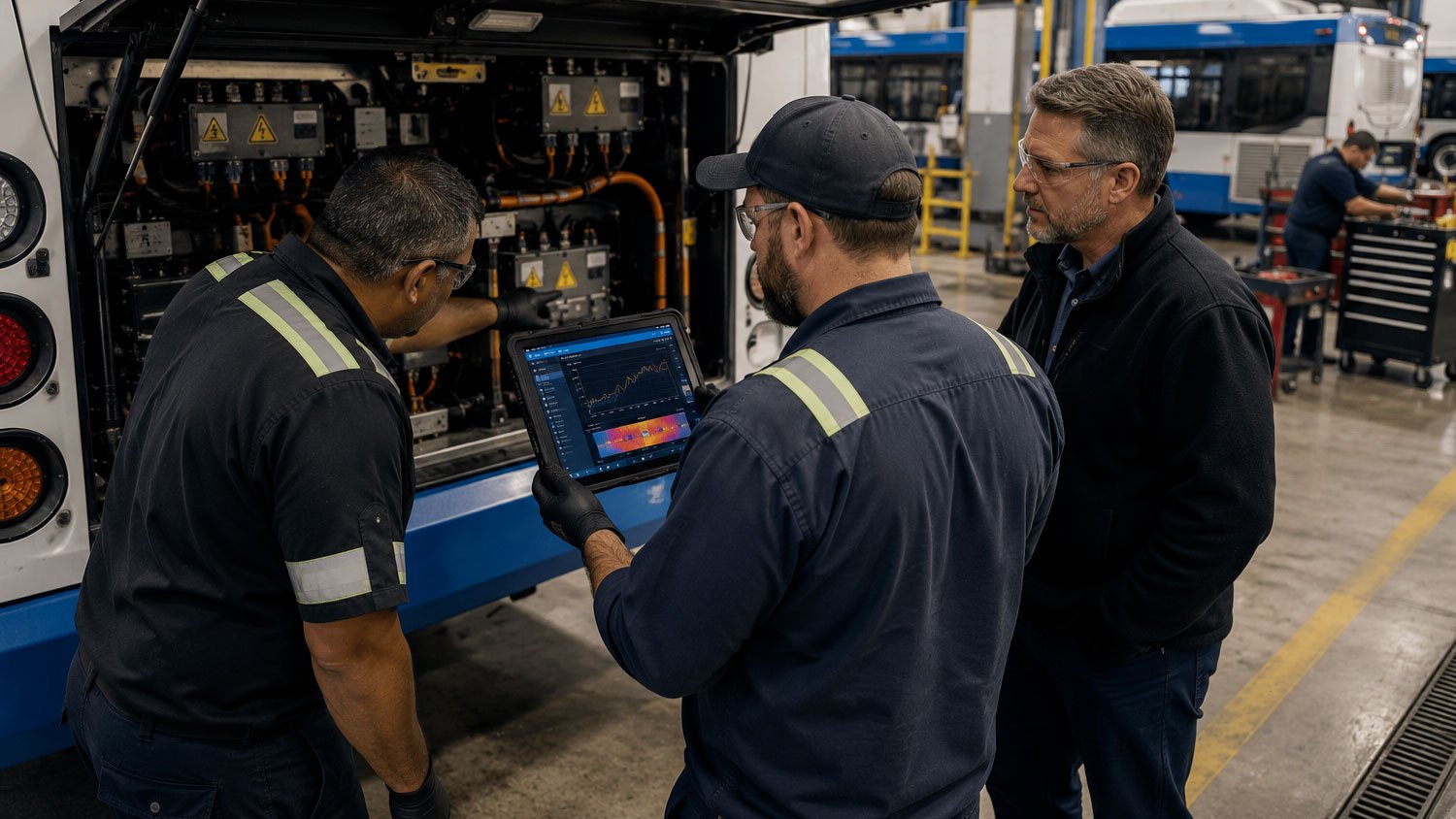
For BEB maintenance and operations teams, the useful warning may happen before anything looks like an emergency. A component may heat in a way that does not match the bus's operating state. A charging condition may become abnormal. A thermal signature may change while no one is standing next to the vehicle.
The NTSB's investigation of the Hamden, Connecticut battery-electric transit bus fire found that moisture in the high-voltage lithium-ion battery system led to battery damage and fire. That does not mean every BEB incident follows the same path. It does mean the first meaningful warning may not be visible from outside the bus.
The fire-safety conversation needs to move earlier.
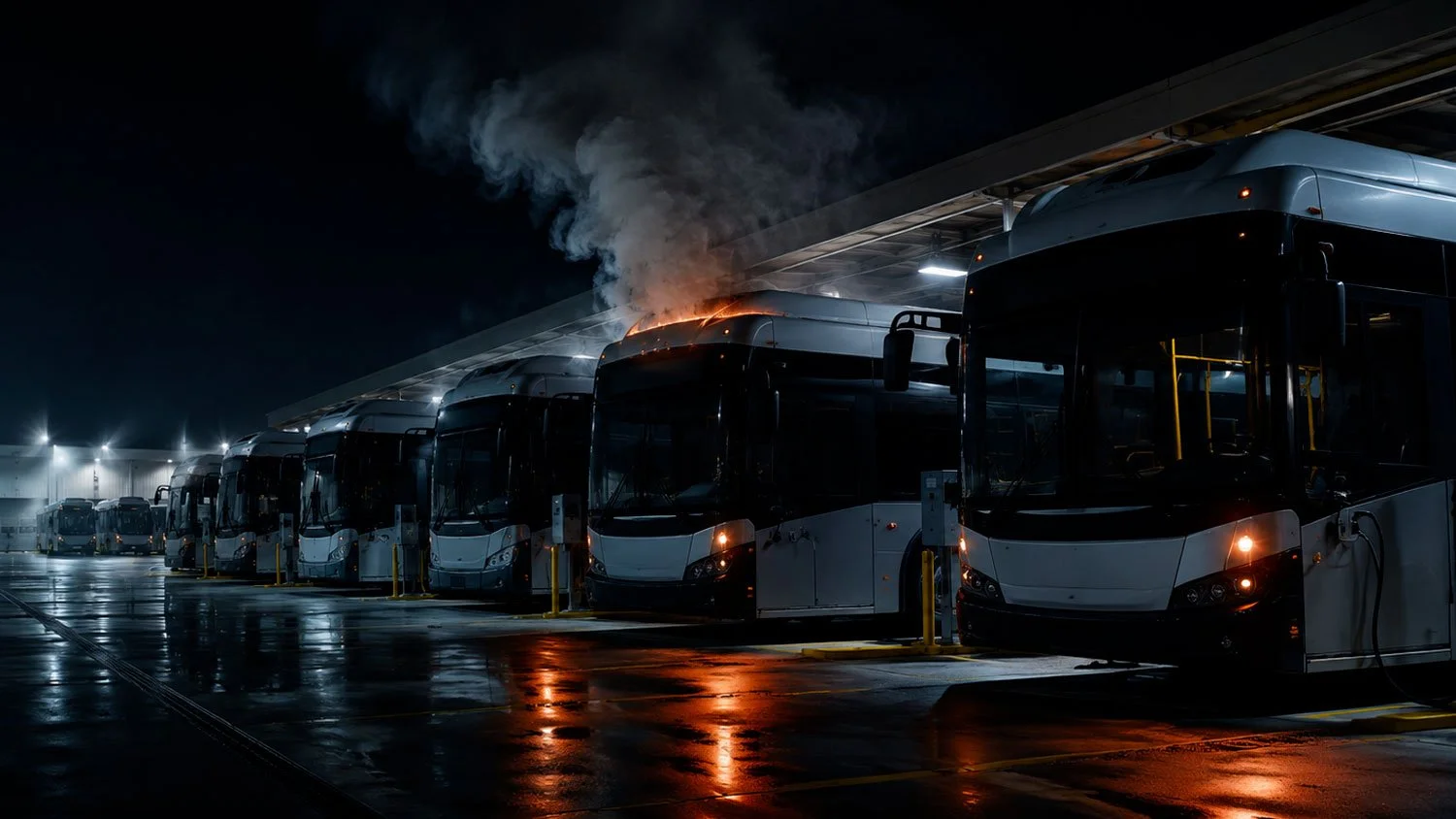
Bus Depot Fire Safety for Battery-Electric Fleets
The most dangerous place for a battery-electric bus may not be the road. It may be the depot.
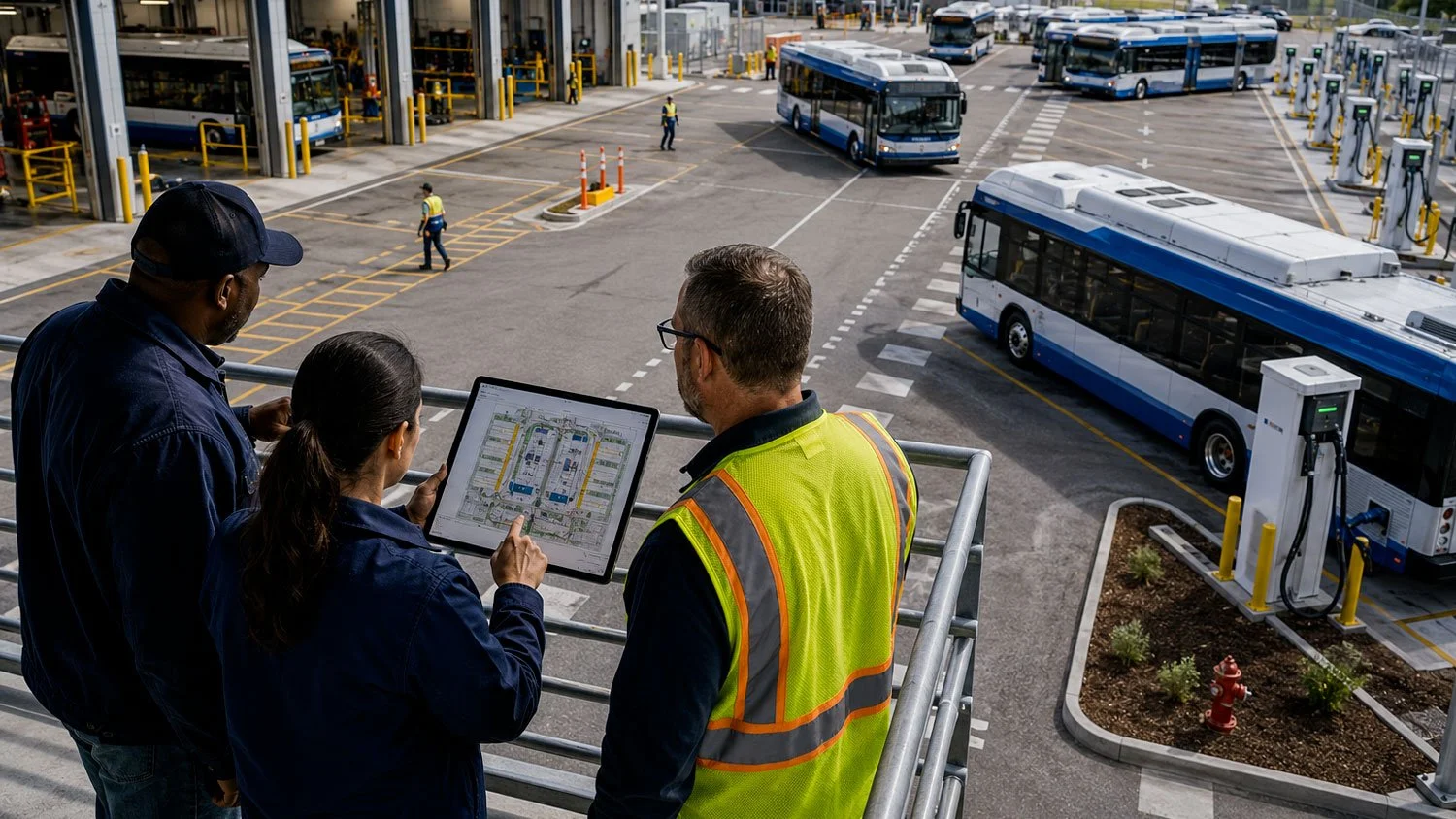
That is not because BEBs are inherently unsafe, and it is not an argument against electrification. It is a risk-concentration problem. At the end of the operating day, vehicles, charging infrastructure, maintenance bays, employees, facilities, and service obligations all gather in one place. If a thermal event starts there, the agency is not managing a vehicle incident alone. It may be managing a facility incident, a service-continuity problem, and an asset-protection problem at the same time.
The Federal Transit Administration's guidebook for deploying battery-electric buses frames deployment as a connected planning challenge involving infrastructure, maintenance, operations, safety, and training. Fire-risk planning belongs in that same connected conversation.
The depot used to be where buses slept. For BEB fleets, it is now part of the fireground.