Confirm the temperature—not just the circuit change.
Digital linear heat detection with mechanical-short discrimination
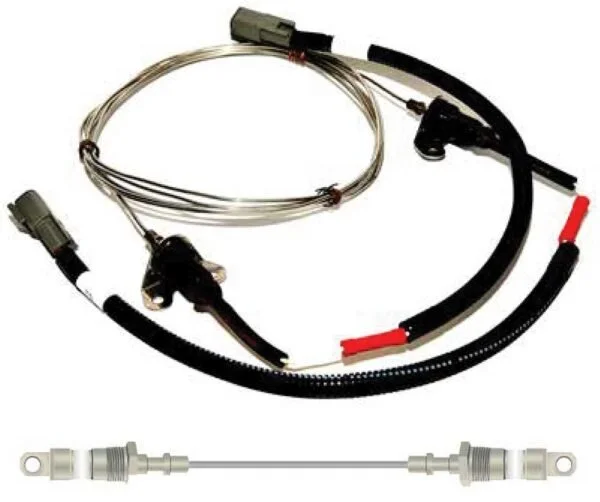
Troman Confirmed Temperature Initiation linear heat detectors provide continuous fixed-temperature sensing along a cable run. When the heat-sensitive insulation reaches its rated temperature, the conductors make contact and create a measuring junction at the alarm location.
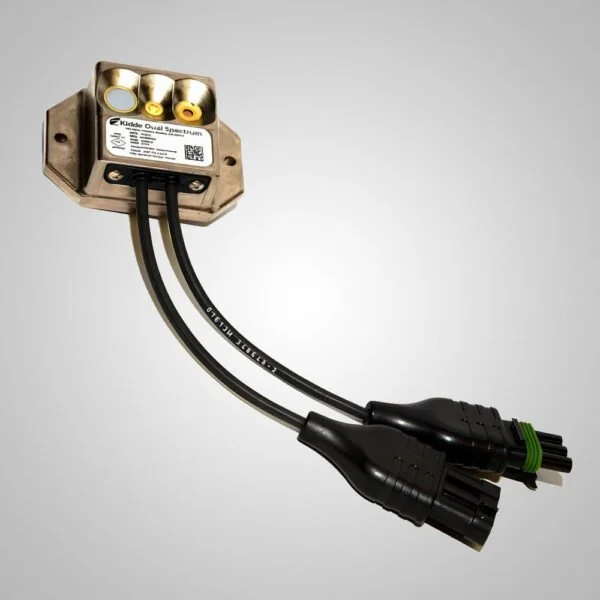
Used with the required CTM interface module, the system can distinguish a mechanical short from heat actuation and confirm the temperature at the event point. That added verification supports strong false-alarm immunity in vehicle and facility applications.
Troman CTI linear heat detectors monitor temperature continuously along a cable run and verify the alarm temperature while distinguishing heat activation from a mechanical short.
Continuous detection across irregular hazard zones
Route the detector where point sensors cannot cover every risk.
Linear detection can follow wiring, battery areas, engine compartments, equipment housings, and other extended or irregular spaces. Multiple alarm-temperature ratings allow the detector to be matched to the normal operating environment and the condition the fleet needs to identify.
Locate and understand the event
A confirmed alarm provides better information for response and investigation.
When paired with compatible location equipment, the system can identify where the overheat occurred along the detector length. Separate short-circuit identification helps maintenance teams distinguish physical damage from a true temperature event.
Key capabilities
· Fixed-temperature digital linear sensing
· Confirmed Temperature Initiation
· Mechanical short-circuit discrimination
· Multiple alarm ratings from 57°C to 180°C
· Alarm-point location with compatible equipment
· Hazardous-location options with required equipment
· Durable flame-retardant outer jacket
Extend detection across the complete hazard zone.
Talk with Troman about detector rating, routing, interface modules, alarm-point location, and integration with Trident.
Download data sheet (PDF) →
Confirm the temperature—not just the circuit change.
Digital linear heat detection with mechanical-short discrimination
Troman Confirmed Temperature Initiation linear heat detectors provide continuous fixed-temperature sensing along a cable run. When the heat-sensitive insulation reaches its rated temperature, the conductors make contact and create a measuring junction at the alarm location.
Used with the required CTM interface module, the system can distinguish a mechanical short from heat actuation and confirm the temperature at the event point. That added verification supports strong false-alarm immunity in vehicle and facility applications.
Troman CTI linear heat detectors monitor temperature continuously along a cable run and verify the alarm temperature while distinguishing heat activation from a mechanical short.
Continuous detection across irregular hazard zones
Route the detector where point sensors cannot cover every risk.
Linear detection can follow wiring, battery areas, engine compartments, equipment housings, and other extended or irregular spaces. Multiple alarm-temperature ratings allow the detector to be matched to the normal operating environment and the condition the fleet needs to identify.
Locate and understand the event
A confirmed alarm provides better information for response and investigation.
When paired with compatible location equipment, the system can identify where the overheat occurred along the detector length. Separate short-circuit identification helps maintenance teams distinguish physical damage from a true temperature event.
Key capabilities
· Fixed-temperature digital linear sensing
· Confirmed Temperature Initiation
· Mechanical short-circuit discrimination
· Multiple alarm ratings from 57°C to 180°C
· Alarm-point location with compatible equipment
· Hazardous-location options with required equipment
· Durable flame-retardant outer jacket
Extend detection across the complete hazard zone.
Talk with Troman about detector rating, routing, interface modules, alarm-point location, and integration with Trident.
Download data sheet (PDF) →

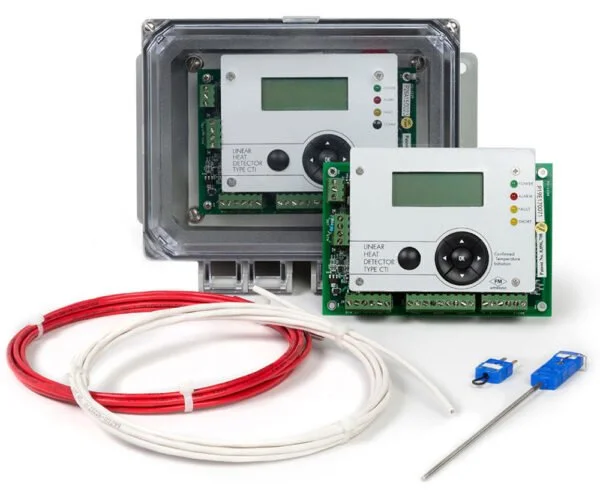 Image 1 of 2
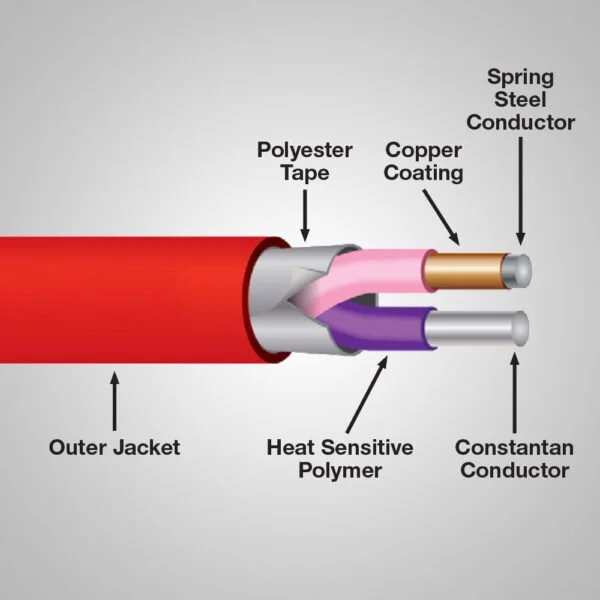 Image 2 of 2