Detect flame fast without treating every heat source like a fire.
Troman optical detection for high-risk vehicle zones
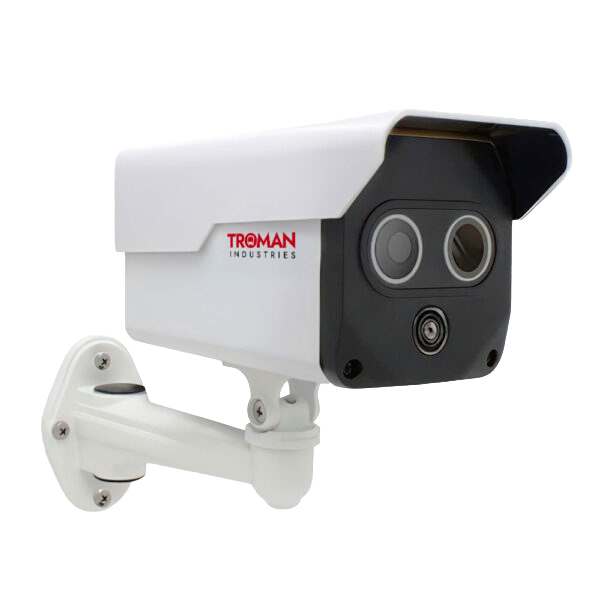
Troman’s dual-band optical detector provides rapid flame detection in engine compartments and other high-hazard vehicle zones. Its sensors monitor two wavelengths within the infrared spectrum, combining fast response with improved immunity to common false-alarm sources.
Detectors can be aimed toward individual components or arranged to protect a larger volume. When the detector recognizes a qualifying flame signature, it sends an alarm to the Troman controller, where the event can initiate operator warnings, emergency outputs, and suppression protocols.
Troman’s dual-band optical flame detector uses two infrared wavelengths to detect flames rapidly in bus engine compartments and other high-risk vehicle areas while reducing false alarms.
Fast response where fire can escalate quickly
Direct the sensor toward the components that matter most.
Turbochargers, fuel-system components, hydraulic systems, and hot engine surfaces can create environments where a small ignition event grows quickly. Optical detection provides a direct line-of-sight method for recognizing flame in these zones.
Multiple detectors can be connected on a monitored channel to cover the geometry of a compartment and communicate with Troman controllers.
Designed for the vehicle environment
Rugged construction supports real-world fleet service.
The detector is designed for broad operating temperatures and uses a sealed enclosure with environmentally protected connectors. A green status indicator supports inspection, while periodic optic cleaning helps maintain performance in dirty operating environments.
Key capabilities
· Dual infrared optical sensing
· Rapid example response against a small pan fire
· 90-degree field of view
· Up to five detectors on a monitored hazard channel
· Status indication and controller alarm output
· NEMA 4X-rated enclosure
· Operating range from -40°C to 125°C
Aim detection at the highest-risk components.
Troman can help determine detector quantity, placement, viewing angles, channel configuration, and integration with suppression or Trident monitoring.
Download data sheet (PDF) →
Detect flame fast without treating every heat source like a fire.
Troman optical detection for high-risk vehicle zones
Troman’s dual-band optical detector provides rapid flame detection in engine compartments and other high-hazard vehicle zones. Its sensors monitor two wavelengths within the infrared spectrum, combining fast response with improved immunity to common false-alarm sources.
Detectors can be aimed toward individual components or arranged to protect a larger volume. When the detector recognizes a qualifying flame signature, it sends an alarm to the Troman controller, where the event can initiate operator warnings, emergency outputs, and suppression protocols.
Troman’s dual-band optical flame detector uses two infrared wavelengths to detect flames rapidly in bus engine compartments and other high-risk vehicle areas while reducing false alarms.
Fast response where fire can escalate quickly
Direct the sensor toward the components that matter most.
Turbochargers, fuel-system components, hydraulic systems, and hot engine surfaces can create environments where a small ignition event grows quickly. Optical detection provides a direct line-of-sight method for recognizing flame in these zones.
Multiple detectors can be connected on a monitored channel to cover the geometry of a compartment and communicate with Troman controllers.
Designed for the vehicle environment
Rugged construction supports real-world fleet service.
The detector is designed for broad operating temperatures and uses a sealed enclosure with environmentally protected connectors. A green status indicator supports inspection, while periodic optic cleaning helps maintain performance in dirty operating environments.
Key capabilities
· Dual infrared optical sensing
· Rapid example response against a small pan fire
· 90-degree field of view
· Up to five detectors on a monitored hazard channel
· Status indication and controller alarm output
· NEMA 4X-rated enclosure
· Operating range from -40°C to 125°C
Aim detection at the highest-risk components.
Troman can help determine detector quantity, placement, viewing angles, channel configuration, and integration with suppression or Trident monitoring.
Download data sheet (PDF) →

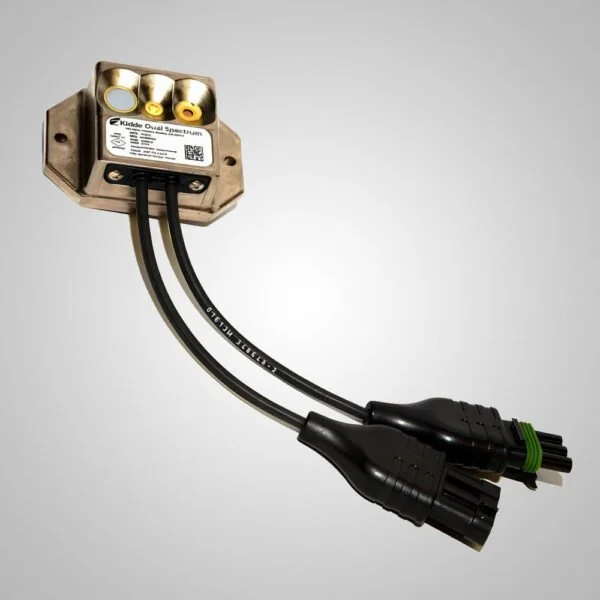 Image 1 of 1