
“Let it burn” is not a plan
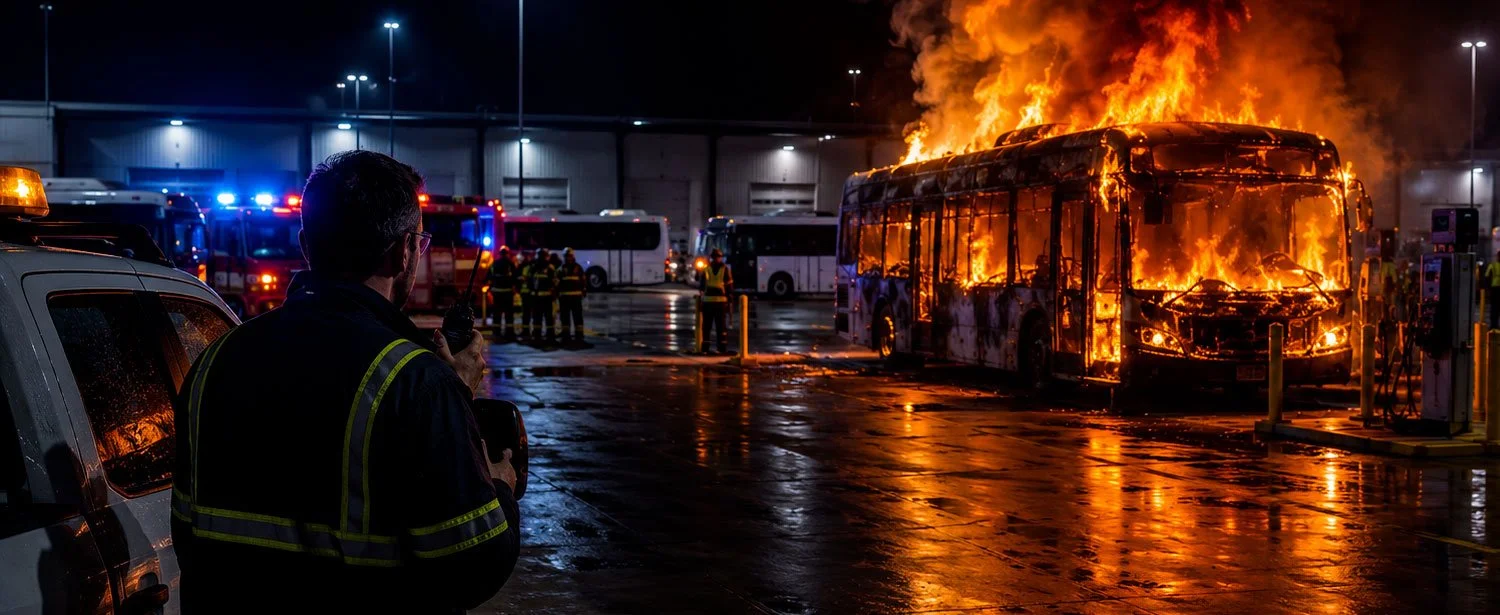
“Let it burn” may be a fireground decision. It should not be the first clear answer in the plan.
“Let it burn” may be a fireground decision. It should not be a planning philosophy.
That distinction is important because the phrase is not completely wrong. Lithium-ion battery fires can be difficult to manage, and responders may face conditions that make an aggressive approach unsafe or ineffective. The U.S. Fire Administration notes that lithium-ion battery fires can reignite after extinguishment and that responders should use post-fire assessment, continued monitoring, and safety zones to manage hazards. The NTSB has also identified safety risks to emergency responders from high-voltage lithium-ion battery fires, including electric shock, thermal runaway, and reignition or fire hazards.
In other words, there may be incidents where standing back is the right tactical choice. That decision belongs to trained responders evaluating the actual conditions in front of them.
The problem begins when “let it burn” moves upstream and becomes the agency’s practical answer before the incident ever happens. If a BEB fire plan assumes that nothing meaningful can be done until responders arrive, or that the vehicle will simply be sacrificed if a battery event occurs, then the plan has skipped too many earlier questions.
Those earlier questions belong in procurement, safety planning, facility design, training, and standard operating procedures. They are not dramatic questions, which is probably why they are easy to underweight. But they determine whether an agency has useful options before the last-resort decision appears.
A planning team should know whether its fire mitigation requirements address abnormal heat before visible smoke. A procurement team should know whether the system being evaluated only detects flame or whether it supports earlier thermal awareness. Safety leaders should know who receives an alert when a bus is parked and charging after hours. Operations should know who has authority to isolate a vehicle, move nearby assets, or secure a charging area. Facilities should know how a thermal event in one bay affects the building and the surrounding fleet. First responders should know what information they will receive before arrival.
If those answers are vague, “let it burn” is no longer just a tactical phrase. It is filling the empty space where planning should have been.
This is why BEB fire mitigation should be treated as a requirements problem as much as a response problem. Agencies do not need to pretend every incident can be stopped. They do need to define what should happen before the situation reaches the point where stopping it is no longer realistic.
That means asking for more than a suppression device. It means asking how the agency will identify abnormal thermal conditions, how alerts will be prioritized, how the right people will be notified, how depot exposure will be considered, how the system will be tested and maintained, and how incident data will be captured afterward.
It also means resisting the urge to evaluate BEB fire systems only by the final moment of discharge or response. The better evaluation starts earlier in the timeline. What does the system know before smoke? What does it communicate before flame? What does it help the agency do while there are still choices available?
This is where procurement language matters. If an RFP asks only for fire suppression, it may receive a fire suppression answer. If it asks for early thermal detection, staged alerting, vehicle and facility notification, maintenance visibility, incident logging, and responder-support information, it invites a very different solution. The questions asked at the beginning shape the tools available at the end.
Troman's Trident™ Transit Fire System should be positioned in that earlier, more complete planning conversation. Trident is being developed to support layered BEB fire-risk response through earlier detection, alerting, and coordination across the transit environment.
The disciplined claim is not that Trident eliminates the possibility of defensive response. No serious system can promise that. The better claim is that transit agencies should not reach a defensive response because nobody saw the problem early enough, nobody received the right alert, or nobody had a defined procedure before conditions escalated.
“Let it burn” may sometimes be what responders have to do. It should never be where the plan begins.
Source links
USFA Lithium-Ion Battery Risks and Response Strategies: https://www.usfa.fema.gov/a-z/lithium-ion-batteries/risks-and-response-strategies/
NTSB Safety Risks to Emergency Responders from Lithium-Ion Battery Fires: https://www.ntsb.gov/safety/safety-studies/Pages/HWY19SP002.aspx