

Fire detection and thermal monitoring
Earlier detection for safer transit fleets
Detection technologies for vehicles, facilities, and critical assets
Earlier detection gives transit personnel more time to evaluate a threat, protect passengers, and prevent a manageable thermal event from becoming a destructive fire. Troman brings together optical, gas, linear heat, terminal lug, and thermal imaging technologies to monitor the areas where vehicle fires are most likely to begin.
These detectors work alongside control panels, dataloggers, displays, and notification systems to identify abnormal conditions and communicate actionable information. From engine compartments and battery enclosures to charging infrastructure and maintenance facilities, Troman, Trident, Protectowire, and moviTHERM solutions provide layered monitoring designed around the realities of modern transit operations.
Troman’s transit fire detection and thermal monitoring solutions identify abnormal heat, flame, gas, and electrical conditions early so fleets can respond before a developing threat becomes a destructive fire.
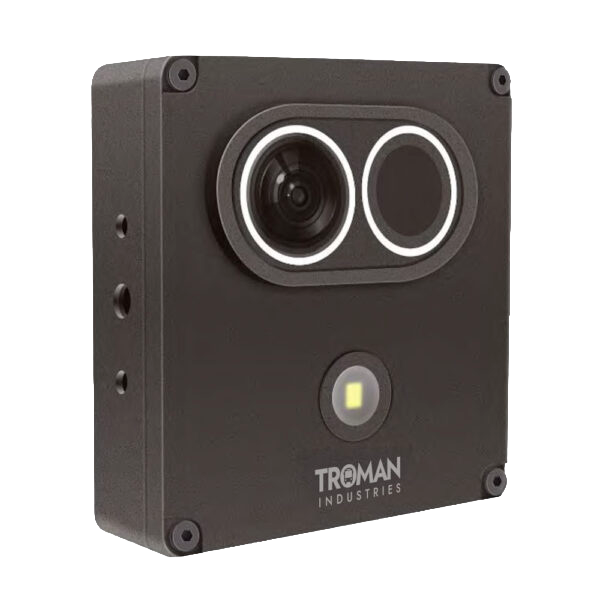
Put thermal monitoring inside the spaces where heat develops.
Compact dual-vision imaging for enclosed transit applications
The TNC20 combines calibrated thermal imaging and visible video in a low-profile housing designed for enclosed spaces. Its wide field of view makes it suitable for compact equipment areas, battery enclosures, electrical compartments, and other locations where installation space is limited.
On-edge analytics, image fusion, alert recordings, onboard storage, relay outputs, and network interfaces allow the camera to monitor defined areas and integrate with Trident. Optional wireless contact sensors can extend temperature measurement beyond the camera’s direct line of sight.
The TNC20 compact dual-vision thermal camera monitors enclosed vehicle and facility spaces with on-edge analytics, thermal and visible alert imagery, and optional wireless temperature sensors.
See temperature and context together
Thermal data identifies the heat; visible imagery helps explain the scene.
Three image-fusion modes combine the thermal and visible views to make developing conditions easier to interpret. A built-in light supports remote visual inspection in dark compartments.
Extend monitoring beyond direct line of sight
Optional contact sensors add measurements in hidden locations.
Wireless sensors can monitor temperatures where the camera cannot see directly, creating additional coverage for components, conductors, or enclosed assemblies.
Key capabilities
Thermal and visible imaging
160 x 120 calibrated thermal array
57-degree field of view with 90-degree option
Three image-fusion modes
Up to 12 monitoring areas
On-edge analytics
Visible-light inspection function
Optional wireless contact sensors
RESTful API, Modbus TCP, and relay I/O
Removable onboard storage
Fit thermal monitoring into the critical enclosure.
Troman can help select camera placement, lens coverage, sensor options, thresholds, and Trident integration for the application.
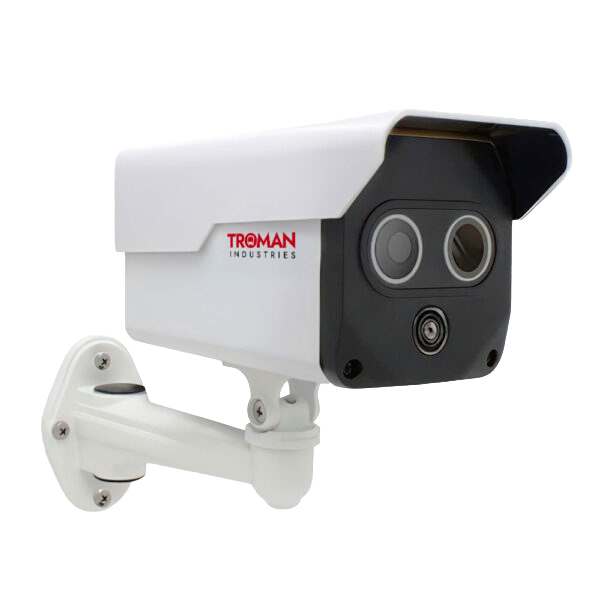
Watch critical assets in thermal and visible light.
Wide-area, network-ready monitoring for vehicles and facilities
The TNC100 combines thermal and visible imaging in a durable housing for continuous monitoring of critical assets. Its wide field of view is suited to larger areas and moderate distances, including maintenance bays, charging infrastructure, parked vehicles, battery areas, and other facility risks.
On-edge analytics allow the camera to evaluate defined areas and continue monitoring even when network connectivity is interrupted. Visible and thermal alert images, onboard storage, relay outputs, and network interfaces support integration with Trident and existing facility systems.
The TNC100 dual-vision thermal camera provides continuous wide-area temperature monitoring, on-camera analytics, visible and thermal alert images, and integration with Troman Trident systems.
Analyze the image at the camera
Keep critical monitoring active during a network interruption.
On-edge processing allows alarm rules and monitoring zones to operate locally. The camera can generate immediate and early-warning conditions, record alert imagery, and communicate through multiple channels.
Integrate without creating another isolated system
Use standard interfaces for alerts, controls, and data.
A browser interface, RESTful API, Modbus TCP support, relay I/O, and removable storage give system designers multiple ways to connect the camera to facility controls, dashboards, and response workflows.
Key capabilities
Thermal and visible imaging
256 x 192 thermal resolution with digital enhancement
Wide 57-degree field of view
Three visible/thermal fusion modes
Up to 12 monitoring areas
On-edge analytics
Alert recordings and removable storage
RESTful API, Modbus TCP, and relay I/O
IR illumination for visible night imaging
Fault relay for failsafe monitoring
Bring continuous thermal awareness to the facility.
Troman can help define camera location, monitoring zones, thresholds, alert paths, and Trident integration for the assets you need to protect.
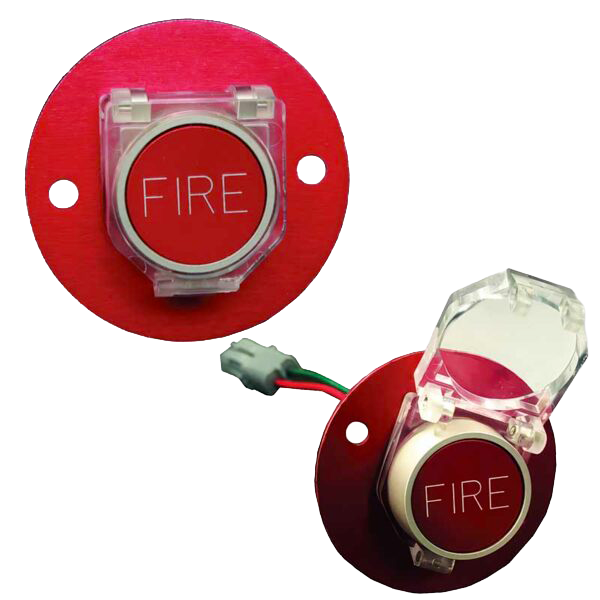
Give the operator an immediate way to act.
Protected manual activation for Troman suppression systems
The Troman manual fire switch gives the vehicle operator direct control of the extinguishing system during an emergency. Installed within reach of the driver, the protected FIRE button can immediately activate suppression and the emergency outputs configured through the Troman controller.
A tamper seal and lift cover help prevent accidental operation while keeping the activation sequence straightforward under pressure. The switch is compatible with Troman multifunction controllers.
The Troman manual fire activation switch allows a bus operator to immediately trigger the vehicle suppression system and configured emergency protocols from the driver compartment.
Simple operation when time is limited
Break the seal, lift the cover, press FIRE.
The activation sequence is intentionally direct. Once operated, the switch sends the manual alarm condition to the controller, which carries out the configured suppression and vehicle response.
A manual layer within an automatic system
Operator control complements automatic detection.
Automatic detectors may identify conditions the operator cannot see, while the manual switch allows the operator to act on visible smoke, flame, or other urgent information. Used together, they provide separate paths to initiate the response.
Key capabilities
Immediate manual suppression activation
Driver-reachable installation
Protective cover and single-use tamper seal
Instruction label included
Compatibility with Troman multifunction controllers
Support for configured vehicle emergency outputs
Operating range from -25°C to 60°C
Keep manual control within reach.
Troman can help place and integrate the manual switch as part of the complete vehicle fire protection system.
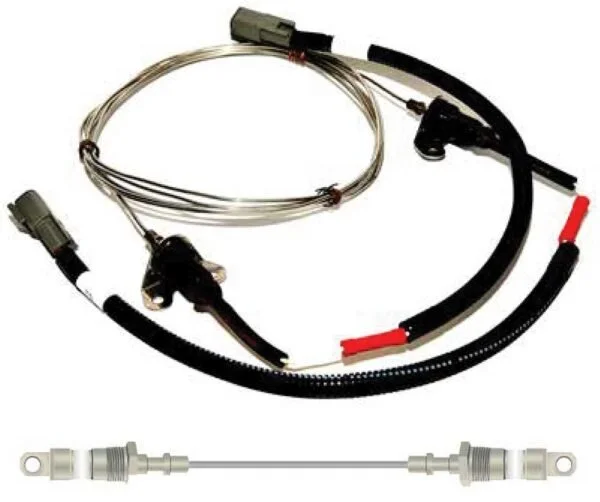
Follow the heat risk across the complete zone.
Resettable linear temperature sensing for demanding vehicle areas
The Troman Terminal Lug Sensing Element provides robust, resettable temperature detection along extended or irregular vehicle hazard zones. The sensing element can be routed around multiple risk points and connected through installation components to a dedicated TLSE control module.
As the element is exposed to elevated temperature, its resistance decreases. When the configured alarm resistance is reached, the module sends an alarm to the Troman controller. The sensor is powered from both ends so it can continue operating through certain types of physical damage.
The Troman Terminal Lug Sensing Element provides resettable heat detection along extended vehicle hazard zones and sends an alarm through its control module when the sensing element reaches the configured condition.
Continuous sensing across the routed element
Monitor more than a single point.
The TLSE can follow the shape of the protected area and respond when the full length or a shorter section is exposed to elevated temperature. This makes it useful around components and spaces where a point detector may not provide sufficient coverage.
Designed to remain useful in a harsh zone
Dual-ended power supports a resilient detection path.
The element is intended for high-temperature vehicle environments and is assembled with Troman installation parts. Available lengths allow the system to be fitted to the geometry of the application.
Key capabilities
Resettable thermistor-based sensing element
Continuous detection across the sensor length
Dual-ended power for resilience through damage
Available lengths from 2.4 to 4.9 m
Alarm through the TLSE control module
Element operating range from -40°C to 125°C
Integration with Troman controllers
Route detection around the risk.
Troman can help define sensing-element length, mounting path, control-module placement, alarm logic, and integration with Trident.
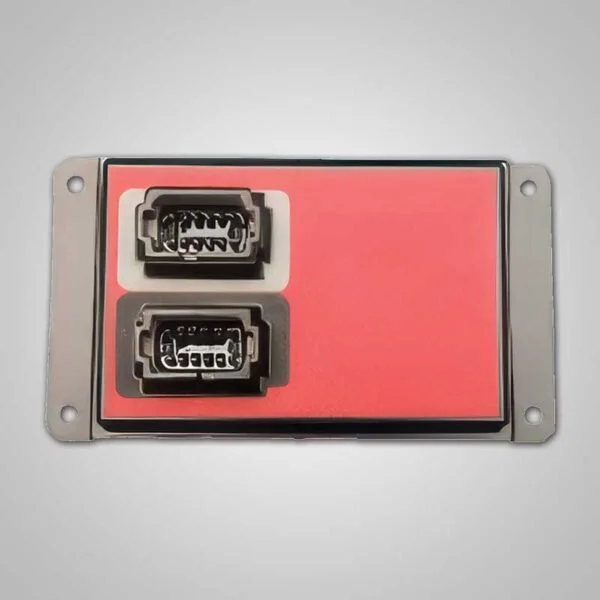
Essential fire-system control in a compact architecture.
Three-channel monitoring for focused vehicle applications
The KT350 is Troman’s compact three-channel controller for vehicle fire, overheat, gas, smoke, and pressure monitoring. It can be integrated into the vehicle dash or paired with a Troman LCD display to provide the operator with clear normal, trouble, and alarm information.
The controller continuously supervises compatible detectors, supports delay, silence, and reset functions, provides vehicle output signals, and can operate Troman suppression hardware for configurable durations.
The Troman KT350 is a compact three-channel vehicle fire-system controller that monitors detectors, alerts the operator, supports emergency outputs, and activates suppression.
Focused control for smaller systems
Use the channels where they provide the greatest value.
The KT350 is suited to vehicles or hazard configurations that require a limited number of monitored zones. Software configuration allows its channels and outputs to be matched to the detector types and response sequence.
Simple indications. Serious response capability.
Normal, trouble, alarm, and manual activation remain distinct.
Color-coded outputs and an external buzzer help the operator understand system condition quickly. The controller can also provide alarm, trouble, and system-OK outputs to the vehicle.
Key capabilities
Up to three detection channels
Configurable setup
Continuous system supervision
Compatibility with multiple detector technologies
System OK, trouble, alarm, and manual-switch indications
Delay, silence, and reset functions
Vehicle output signals
Suppression operation up to 60 seconds in increments
Keep the system focused and fully monitored.
Troman can help configure the KT350 for the detector channels, operator interface, outputs, and suppression response required by the vehicle.
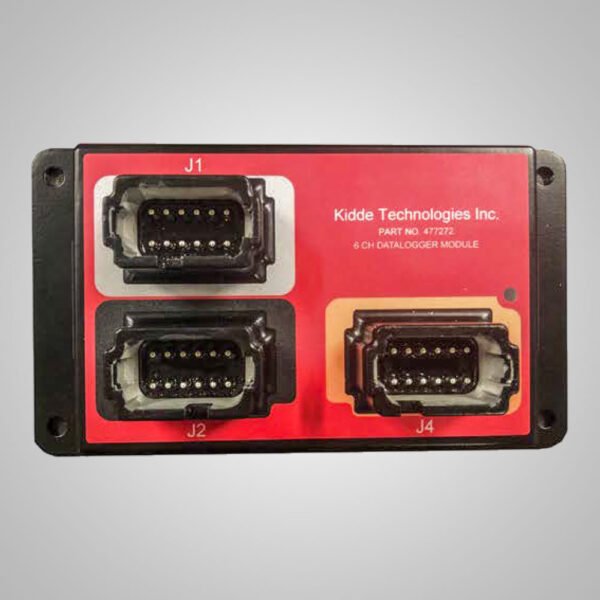
Flexible control for multiple vehicle hazard zones.
Six-channel monitoring, datalogging, and emergency outputs
The Troman KT600 is a configurable six-channel datalogging controller for vehicles using multiple detectors in one or more high-risk zones. It continuously monitors compatible detection and suppression equipment and provides the logic needed to turn an alarm into an organized response.
The controller supports optical, thermal, gas, smoke, and pressure detection, records system activity, communicates through J1939 CAN, and can activate configured vehicle emergency outputs and Troman suppression hardware.
The Troman KT600 is a six-channel bus fire-system controller that supervises multiple detector types, logs events, supports J1939 CAN, and coordinates suppression and vehicle emergency outputs.
Capacity without unnecessary complexity
Match six channels to the risks that matter most.
The KT600 fits applications that need more segmentation and detector capacity than an entry-level controller but do not require the KT1200’s full 12-channel architecture. Software configuration allows the system to be adapted to the vehicle.
Connect alarms to fleet procedures
Support shutdown, warning, evacuation, and suppression.
Configured outputs can assist with HVAC or fan shutdown, engine derate or shutdown, hazard-light activation, passenger evacuation, and extinguisher operation. Final response logic should be coordinated with the OEM and agency.
Key capabilities
Up to six detection channels
System datalogging
Software-configurable setup
Continuous detection and suppression monitoring
Compatibility with multiple detector technologies
SAE J1939 CAN capability
Vehicle emergency-output support
Troman suppression integration
Right-size the controller for the vehicle.
Troman can help determine whether the KT600 provides the appropriate channel capacity, outputs, and integration for your application.
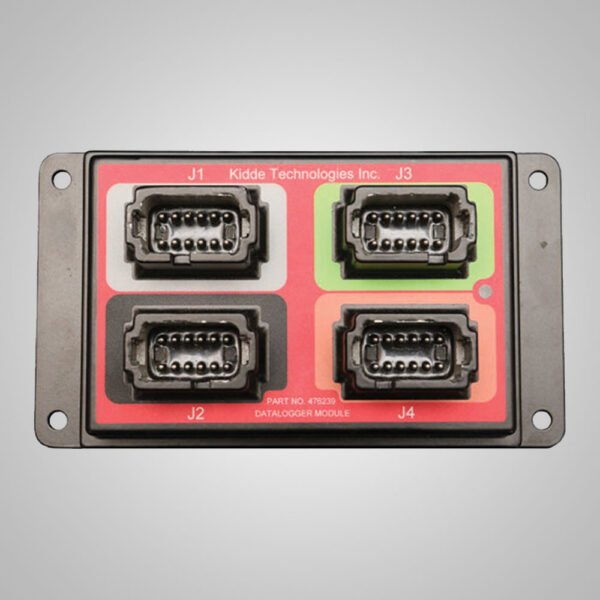
Control more detectors across more high-risk zones.
Troman’s most capable multifunction fire-system controller
The KT1200 is Troman’s advanced 12-channel datalogging controller for vehicles requiring multiple detector types across multiple hazard zones. It continuously supervises the detection and suppression system, records system activity, and supports detailed operator information through the Troman LCD display.
The controller can monitor thermal, optical, gas, smoke, and pressure inputs, communicate through J1939 CAN, provide vehicle emergency outputs, and operate two Troman extinguishers for configurable discharge durations.
The Troman KT1200 is a 12-channel transit fire-system controller that monitors multiple detector types, logs events, communicates through J1939 CAN, and controls up to two extinguishers.
A controller for complex vehicle architectures
Separate channels help organize multiple risks and zones.
Large vehicles, advanced propulsion systems, and layered detection strategies may require more inputs than a basic controller can support. The KT1200 provides capacity and configuration flexibility for systems spanning multiple areas and technologies.
Detailed information for the operator and fleet
Pair the controller with the LCD display and vehicle network.
The LCD interface can present specific trouble and alarm messages, while CAN capability supports connection to the vehicle architecture. Datalogging creates a record that can assist maintenance, event review, and system diagnosis.
Key capabilities
Up to 12 detection channels
Multifunction datalogging
Software-configurable setup
Continuous system supervision
Optical, gas, smoke, pressure, and thermal monitoring
SAE J1939 CAN capability
Control of two extinguishers
Configurable discharge timing up to 60 seconds
Build the controller around the complete vehicle.
Troman can map detector channels, zones, outputs, display messages, CAN signals, and suppression timing for your platform.
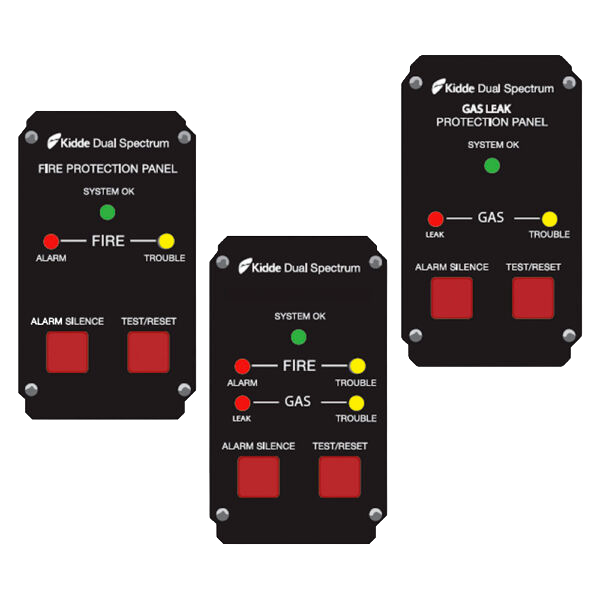
Turn detector signals into a coordinated vehicle response.
Operator alerts, system supervision, and suppression control
Troman fire and gas protection control panels provide the operator with visual and audible system status while continuously supervising compatible detection and suppression equipment. Surface- and flush-mounted options place critical information and controls within the driver compartment.
When an alarm occurs, the panel can support operator actions and configured vehicle outputs, including audible warning, system delay, reset, equipment shutdown, engine derate or shutdown, hazard-light activation, evacuation procedures, and suppression discharge.
Troman fire and gas protection control panels supervise vehicle detectors and suppression hardware, warn the operator, and support configured emergency outputs when a fire, overheat, smoke, or gas condition occurs.
Clear status when the operator needs it
Use distinct indications for normal, trouble, and alarm conditions.
The panel communicates system OK, trouble, and alarm states through color-coded indicators and an external audible device. Driver controls can be configured to support delay, silence, reset, and suppression response according to the application.
Connect detection to the vehicle
Emergency outputs can coordinate more than the extinguisher.
The control panel can provide outputs to other vehicle systems so the response is not isolated from operations. The precise sequence should be defined with the vehicle builder, agency procedures, and suppression-system design.
Key capabilities
·Single- or dual-channel configurations
·Continuous detection and suppression monitoring
Compatibility with optical, gas, smoke, pressure, and thermal detectors
Visual and audible status indication
Configurable alarm delay and reset functions
Emergency-output support
Suppression activation after configured delay
Coordinate the complete response.
Troman can configure the panel around detector types, operator controls, vehicle outputs, suppression timing, and fleet procedures.
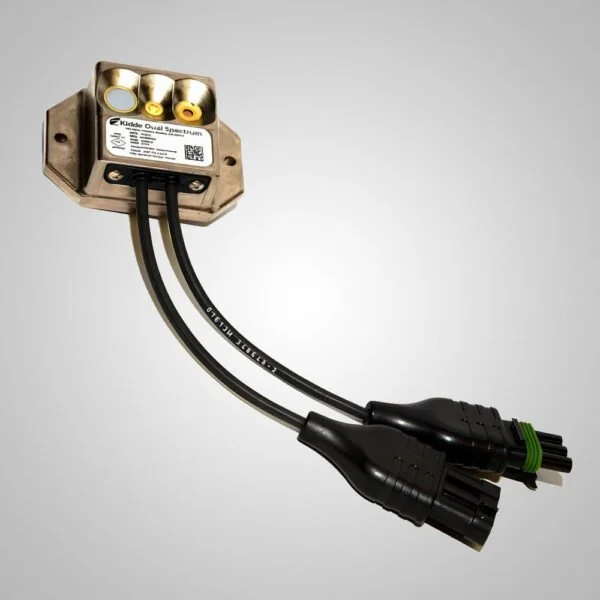
Detect flame fast without treating every heat source like a fire.
Troman optical detection for high-risk vehicle zones
Troman’s dual-band optical detector provides rapid flame detection in engine compartments and other high-hazard vehicle zones. Its sensors monitor two wavelengths within the infrared spectrum, combining fast response with improved immunity to common false-alarm sources.
Detectors can be aimed toward individual components or arranged to protect a larger volume. When the detector recognizes a qualifying flame signature, it sends an alarm to the Troman controller, where the event can initiate operator warnings, emergency outputs, and suppression protocols.
Troman’s dual-band optical flame detector uses two infrared wavelengths to detect flames rapidly in bus engine compartments and other high-risk vehicle areas while reducing false alarms.
Fast response where fire can escalate quickly
Direct the sensor toward the components that matter most.
Turbochargers, fuel-system components, hydraulic systems, and hot engine surfaces can create environments where a small ignition event grows quickly. Optical detection provides a direct line-of-sight method for recognizing flame in these zones.
Multiple detectors can be connected on a monitored channel to cover the geometry of a compartment and communicate with Troman controllers.
Designed for the vehicle environment
Rugged construction supports real-world fleet service.
The detector is designed for broad operating temperatures and uses a sealed enclosure with environmentally protected connectors. A green status indicator supports inspection, while periodic optic cleaning helps maintain performance in dirty operating environments.
Key capabilities
· Dual infrared optical sensing
· Rapid example response against a small pan fire
· 90-degree field of view
· Up to five detectors on a monitored hazard channel
· Status indication and controller alarm output
· NEMA 4X-rated enclosure
· Operating range from -40°C to 125°C
Aim detection at the highest-risk components.
Troman can help determine detector quantity, placement, viewing angles, channel configuration, and integration with suppression or Trident monitoring.
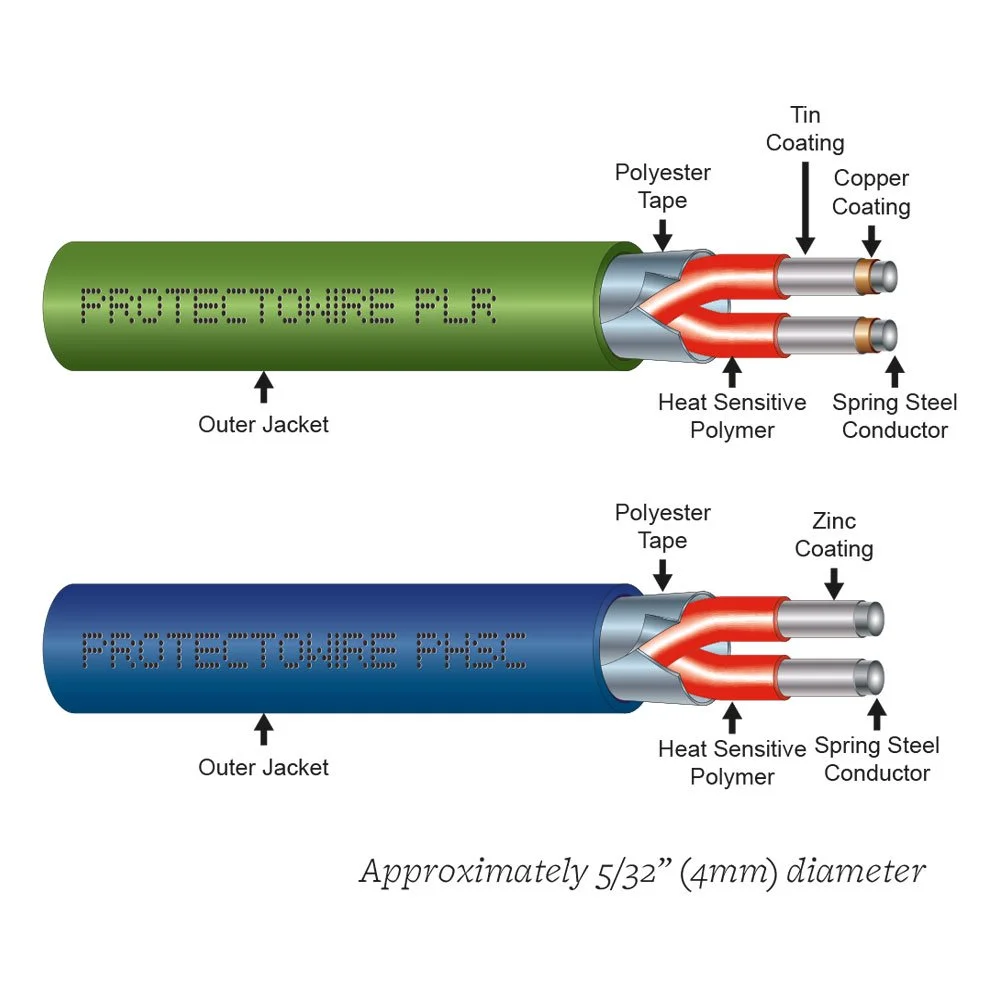
Put detection along the hazard—not merely near it.
Troman-integrated Protectowire solutions for vehicles and facilities
Through its distribution partnership with Protectowire FireSystems, Troman adds a broad range of linear heat detection options to its transit safety portfolio. The detector follows the protected area and responds when a section reaches its rated temperature, making it well suited to extended, concealed, or irregular hazards.
Protectowire products can be applied to rolling stock, buses, maintenance facilities, transit stations, charging areas, equipment spaces, and other demanding environments. Troman integrates the detection layer with its notification, monitoring, and suppression architecture for streamlined support.
Troman integrates Protectowire linear heat detection systems to provide continuous proximity fire detection along transit vehicles, facilities, charging infrastructure, and other extended hazard areas.
Coverage for harsh and difficult spaces
Choose detector construction for the environment.
Transportation applications can expose detection cable to vibration, moisture, chemicals, salt, abrasion, and changing temperatures. Protectowire offers detector constructions and interface options designed for a range of environmental and operating conditions.
One detection layer within a connected system
Pair the cable with alerts, controls, and response protocols.
Troman can incorporate Protectowire detection into Trident dashboards, notification paths, vehicle or facility controls, and suppression strategies. The goal is not simply to sense heat, but to make the resulting information useful to the people responsible for the asset.
Key capabilities
Continuous proximity detection along the protected area
Fixed-temperature detector options
Jacket options for demanding environments
Vehicle, rolling-stock, station, and facility applications
Compatible interface and control modules
Integration with Troman monitoring and response systems
Support through Troman and Protectowire
Bring continuous detection to the hard-to-monitor areas.
Troman can help select the detector type, alarm rating, routing, controls, and integration appropriate to the transit application.
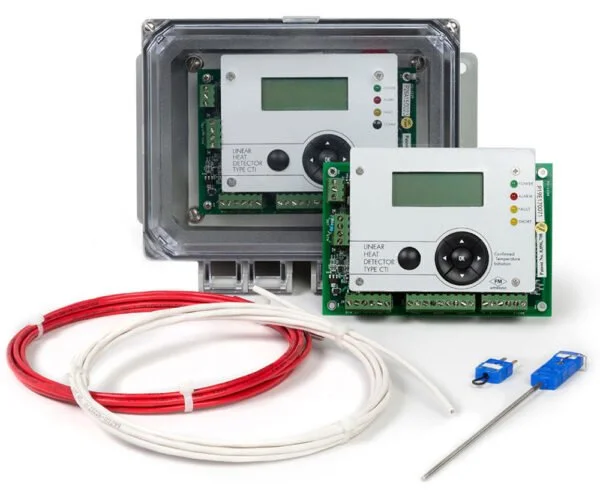
Confirm the temperature—not just the circuit change.
Digital linear heat detection with mechanical-short discrimination
Troman Confirmed Temperature Initiation linear heat detectors provide continuous fixed-temperature sensing along a cable run. When the heat-sensitive insulation reaches its rated temperature, the conductors make contact and create a measuring junction at the alarm location.
Used with the required CTM interface module, the system can distinguish a mechanical short from heat actuation and confirm the temperature at the event point. That added verification supports strong false-alarm immunity in vehicle and facility applications.
Troman CTI linear heat detectors monitor temperature continuously along a cable run and verify the alarm temperature while distinguishing heat activation from a mechanical short.
Continuous detection across irregular hazard zones
Route the detector where point sensors cannot cover every risk.
Linear detection can follow wiring, battery areas, engine compartments, equipment housings, and other extended or irregular spaces. Multiple alarm-temperature ratings allow the detector to be matched to the normal operating environment and the condition the fleet needs to identify.
Locate and understand the event
A confirmed alarm provides better information for response and investigation.
When paired with compatible location equipment, the system can identify where the overheat occurred along the detector length. Separate short-circuit identification helps maintenance teams distinguish physical damage from a true temperature event.
Key capabilities
· Fixed-temperature digital linear sensing
· Confirmed Temperature Initiation
· Mechanical short-circuit discrimination
· Multiple alarm ratings from 57°C to 180°C
· Alarm-point location with compatible equipment
· Hazardous-location options with required equipment
· Durable flame-retardant outer jacket
Extend detection across the complete hazard zone.
Talk with Troman about detector rating, routing, interface modules, alarm-point location, and integration with Trident.
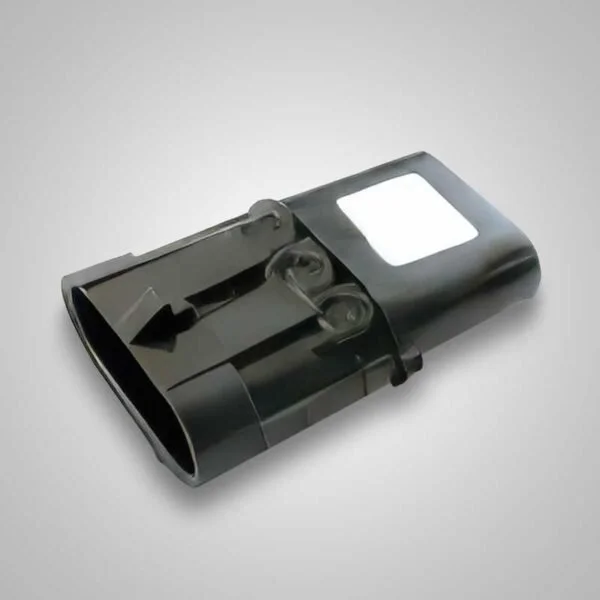
Know when a detection channel is no longer complete.
Continuous line supervision for Troman detector circuits
The Troman end-of-line device completes a detector channel and provides the resistance required for continuous circuit supervision. When the device or part of the circuit is disconnected, the controller recognizes the open circuit and reports a fault.
Installed after the final detector on a channel, the compact device supports optical, gas, and linear detection circuits using compatible Weather-Pack connections. It also helps technicians isolate a fault to a specific channel during diagnosis.
The Troman end-of-line device continuously supervises compatible fire and gas detection channels and creates an immediate fault condition if the monitored circuit is opened.
A small component with an important job
System availability depends on knowing when the circuit changes.
A detector cannot provide protection if the wiring path is incomplete and no one knows it. End-of-line supervision helps distinguish an intact monitored channel from one affected by a loose connection, removed component, or damaged cable.
Rugged enough for hazard-zone installation
Use it internally, externally, or within the protected area.
The waterproof device is designed for broad temperatures and can be mounted in the locations required by the detector layout. Its passive operation adds monitoring without introducing meaningful current demand.
Key capabilities
·Compatible with Troman KT-series controllers
Works with compatible optical, gas, and linear detectors
Connects after the last detector on each channel
Supports continuous circuit monitoring
Creates an immediate open-circuit fault when removed
Waterproof construction
Operating range from -40°C to 125°C
Complete the monitored circuit.
Troman can help confirm the correct end-of-line arrangement for each detector channel and controller configuration.
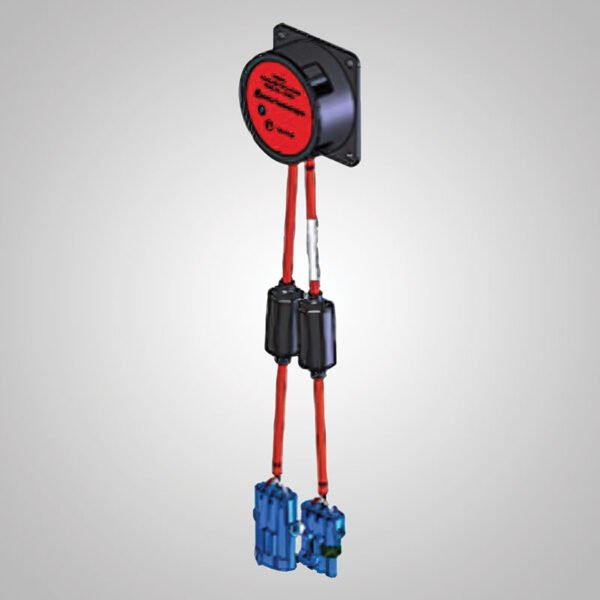
Detect hydrogen where a leak can become a serious hazard.
Troman monitoring for fuel-cell transit vehicles
Troman’s hydrogen gas detector provides resettable point sensing for hazardous areas on hydrogen fuel-cell vehicles. Its temperature-compensated sensing element provides separate trace and significant alarm outputs to support early warning and escalation.
The detector can be installed near likely leak or accumulation points and connected to Troman controllers for monitored operation. When a threshold is reached, the system can warn the operator and support configured emergency procedures.
Troman’s hydrogen gas detector monitors fuel-cell transit vehicle hazard zones and provides two-stage alarms to help agencies identify and respond to hydrogen leaks.
Early warning before the higher threshold
Two-stage alarms create time for an organized response.
The trace alarm is intended to surface a developing condition before it reaches the significant threshold. Depending on system configuration, a significant alarm can be latched and connected to vehicle shutdown, ventilation, hazard lights, evacuation, or other emergency protocols.
Configure detection for hydrogen behavior
Placement, ventilation, and enclosure geometry matter.
Hydrogen is highly buoyant, so detector location should reflect likely leak points and accumulation areas. Troman works with fleets and vehicle builders to evaluate sensor placement, quantity, wiring, and controller logic for the specific vehicle architecture.
Key capabilities
Trace alarm at 12.5% LEL
Significant alarm at 25% LEL
Visual power, alarm, and fault indication
Temperature-compensated sensing element
Multiple detectors per controller channel
Continuous line monitoring through an end-of-line device
Operating range from -40°C to 85°C
Add hydrogen detection to the vehicle safety plan.
Troman can help match detector placement and response logic to your fuel-cell vehicle platform and operating procedures.
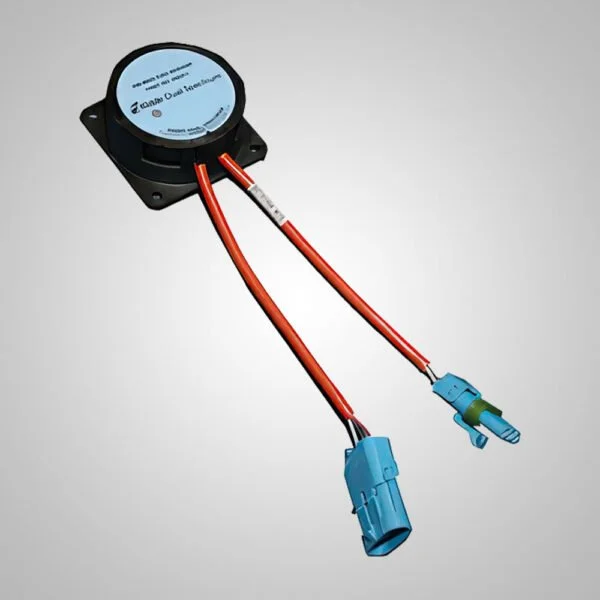
Find a fuel leak before it becomes an ignition source.
Two-stage gas detection for CNG, LNG, and propane vehicles
Troman’s combustible gas detector provides resettable point sensing for fuel-gas leaks in vehicle hazard zones. The temperature-compensated metal-oxide sensor is designed for CNG, LNG, and propane applications and provides separate trace and significant alarm outputs.
Installed near likely accumulation or release points, the detector can warn the operator at a lower concentration and initiate stronger emergency protocols when the higher threshold is reached. Multiple detectors can be connected to a monitored channel through compatible Troman controllers.
Troman’s combustible gas detector monitors CNG, LNG, and propane vehicle hazard zones and provides trace and significant alarms so transit fleets can respond before a fuel leak becomes a fire risk.
Two alarm levels support a measured response
Warn early, then escalate when the condition becomes significant.
A trace alarm can provide visual and audible warning while allowing the system to reset if the concentration falls. A significant alarm can be latched and used to initiate emergency procedures such as stopping the vehicle, activating hazards, shutting down equipment, and evacuating passengers.
Place detection where gas is most likely to collect
Sensor location is part of the safety strategy.
Common monitoring locations include engine compartments, fuel-fill areas, and fuel-cylinder exhaust points. Troman can help evaluate fuel type, enclosure geometry, ventilation, detector quantity, and channel design.
Key capabilities
Trace alarm at 20% LEL
Significant alarm at 50% LEL
Visual status and fault indication
Temperature-compensated metal-oxide sensing element
Multiple detectors per controller channel
Continuous line monitoring with an end-of-line device
Operating range from -40°C to 85°C
Build gas detection around the fuel system.
Talk with Troman about detector placement, alarm logic, vehicle protocols, and integration with Trident or Troman controllers.
Make system status understandable at a glance.
Clear operator messages and controls for Troman fire systems
The Troman LCD mini display presents normal, trouble, low-voltage, fire, and gas conditions from compatible multifunction controllers. Color-coded screens, channel information, date and time, and fleet-specific messages help the operator understand what the system is reporting.
The interface also provides selected controls for silencing the external buzzer, delaying suppression for a defined period, and resetting the system after an event. More advanced controllers allow messages to be tailored to the vehicle and fleet.
The Troman LCD mini display gives bus operators clear fire-system status, channel-specific alarm messages, and key controls for silence, delay, and reset.
Turn a warning light into useful information
Show the condition, channel, and system state.
A text display can reduce uncertainty during a trouble or alarm condition. The operator can see whether the issue is low voltage, a channel fault, a fire alarm, or a trace or significant gas condition.
Support the operator’s next action
Keep essential controls together.
Silence, delay, and reset functions provide the interface needed to follow the configured emergency sequence. The display should be positioned and programmed as part of the broader operator environment.
Key capabilities
Time and date display
Controller software and vehicle identification
Normal, low-voltage, trouble, fire, and gas messages
Channel-specific alarm information
Configurable messages with supported controllers
External-buzzer silence control
Suppression delay control
System reset control
Give the operator clearer information.
Troman can pair the LCD display with the appropriate controller and tailor messages to the vehicle’s zones and procedures.
Download data sheet (PDF)→