
When the bus is parked, the risk is not
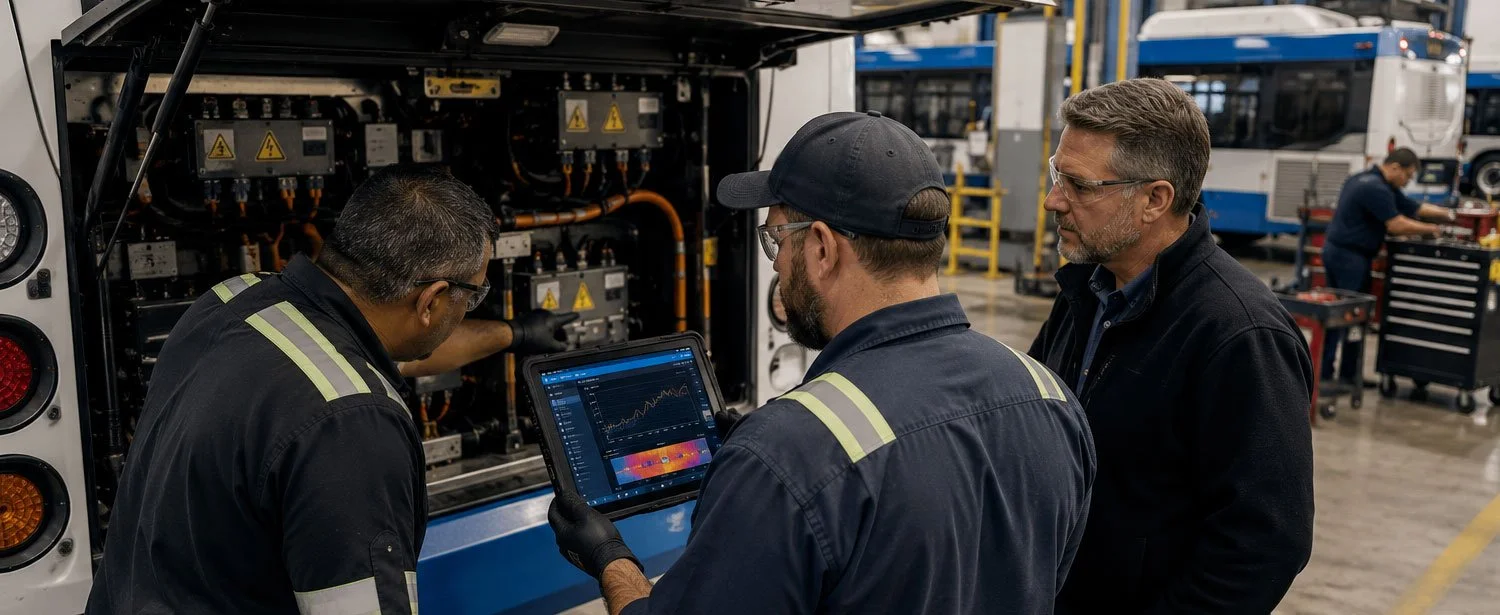
A parked bus is not inactive from a risk perspective. It is just less supervised.
A parked battery-electric bus can look like the end of the story. The route is complete, the driver is gone, and the vehicle is back where it belongs. In a conventional operations mindset, the bus has moved from active service into storage.
For BEB fire planning, that mindset is too narrow.
A parked bus may still be part of an active operating environment. It may be connected to charging equipment, cooling after service, balancing battery systems, waiting for inspection, staged in a maintenance bay, or sitting close to other vehicles needed for morning service. It may also be in a period of thinner staffing, when fewer people are physically present to notice early signs of trouble.
The Federal Transit Administration's BEB deployment guide connects electrification with infrastructure, maintenance, safety, workforce training, and operations planning. That same integrated mindset should follow the bus through its full duty cycle. Fire-risk planning cannot focus only on the route, because the bus does not stop being relevant when passengers step off.
A duty-cycle view starts with route service. On route, the bus has a driver, public visibility, dispatch context, and a location that can be communicated to responders. That does not make incidents easy, but it does make them visible.
The next stage is layover or return to depot. This is where status can become less clear. A bus may have completed a demanding route, experienced high load, used HVAC heavily, or returned with faults that need attention. If there is no consistent process for capturing post-route conditions, small warning signs can be treated as ordinary end-of-day noise.
Inspection and staging come next. Depending on the agency, the bus may be checked, parked, queued for charging, or moved toward maintenance. This is a critical handoff point because responsibility may shift between operators, dispatch, maintenance, and facility teams.
Charging is the most obvious off-route safety window. It may involve long dwell times, high-power equipment, vehicle-to-charger communication, software status, and after-hours monitoring. A charging condition that would be easy to investigate at 2 p.m. may be much harder to interpret at 2 a.m. if the alert pathway is unclear.
Overnight storage deserves equal attention. Agencies often think of this period as downtime, but the risk environment may be highly concentrated. Multiple BEBs may be parked close together. Some may be charging. Others may be waiting for pullout. Facility staffing may be reduced. The number of nearby assets may be high while the number of observers is low.
Maintenance bay activity adds another layer. Work may involve diagnostics, electrical systems, charger issues, battery-related concerns, or other vehicle conditions that require clear procedures. A thermal-risk plan should not assume the bus is either fully in service or fully parked. Maintenance is its own operating state.
Morning pullout closes the loop. If overnight warnings, charger faults, or maintenance notes are not connected to dispatch and fleet availability decisions, a bus may re-enter service with unresolved questions. The duty cycle repeats, and the organization may carry yesterday's uncertainty into today's route.
A full duty-cycle approach does not require agencies to overcomplicate every moment. It requires them to define what information matters at each stage and who is responsible for acting on it. Vehicle status, charging status, location, thermal condition, maintenance history, and alert ownership may all change as the bus moves through the day.
Troman's Trident™ Transit Fire System can be positioned around that full-cycle reality. Trident is being developed to support earlier thermal awareness and coordinated alerting across transit environments where buses move between service, depot, charging, storage, and maintenance.
The practical point is simple enough: BEB fire planning should follow the bus wherever the risk follows the bus.
When the bus is parked, the route may be over. The risk is not.
Source links
FTA BEB Deployment Guide: https://rosap.ntl.bts.gov/view/dot/68845